
When the weather turns fiercely bright and hot, it is very easy to look at a shallow creek and write it off. Water that barely covers a bass’s back does not exactly scream opportunity. But that is precisely the sort of assumption that can cost you a proper fish.
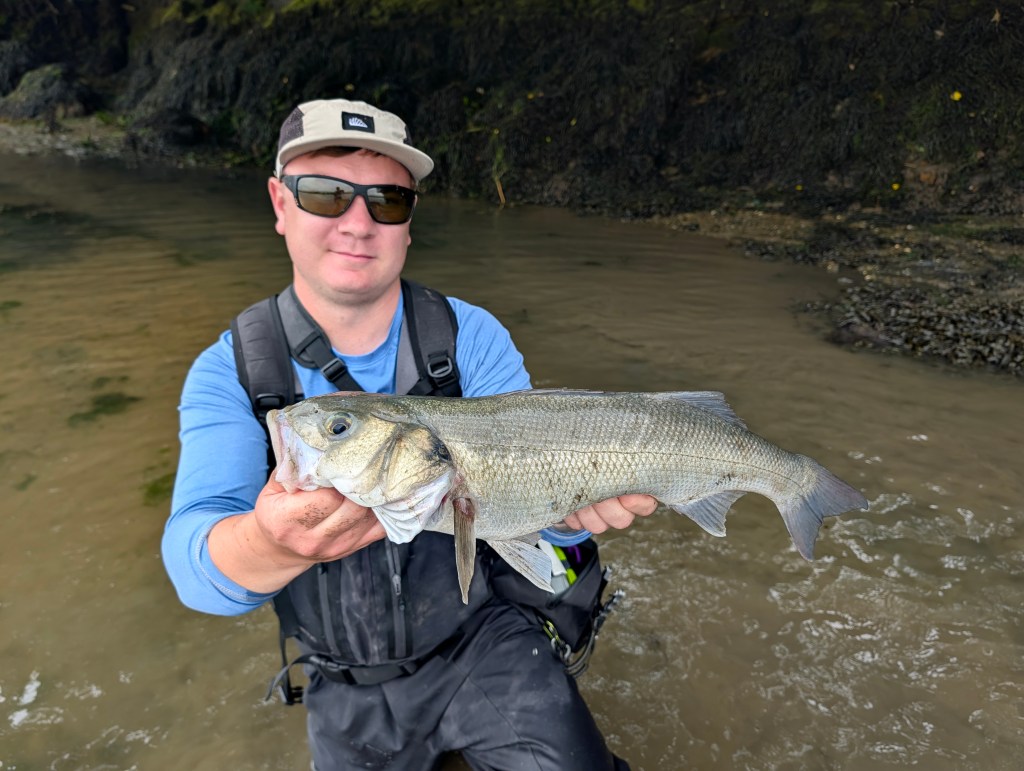
A recent guided session delivered a perfect reminder. Nathan landed a lovely 57cm bass from just a few inches of water, beneath a canopy of trees in a small creek. The capture was not luck. It came from reading the conditions, recognising a tiny piece of fishable habitat and treating shallow water with the respect it deserves.
WATCH, READ OR LISTEN…
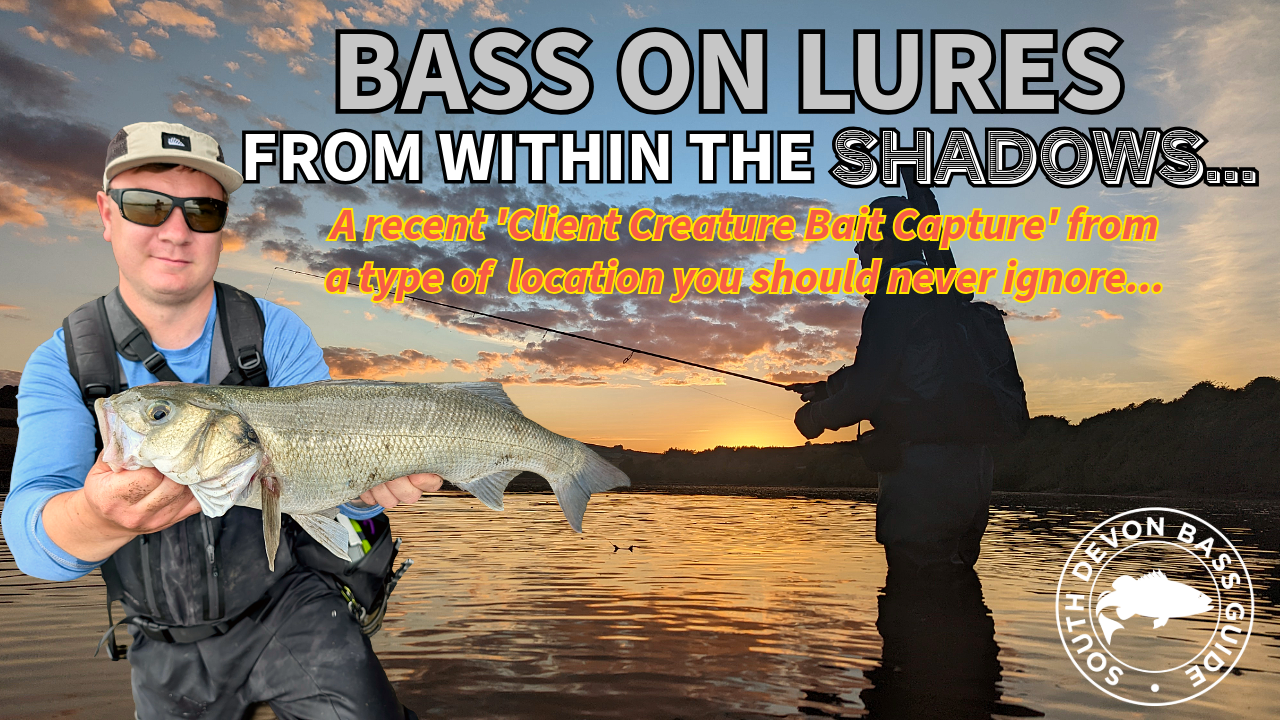
TO WATCH – Please click on the image below – this will take you to my South Devon Bass Guide YouTube Channel.
TO LISTEN – Please click on the link to my Spotify Page.
TO READ – To read, then please read a post created via my original video production via the AI Platform – Video to Blog.
Key Takeaways
- In hot, bright conditions, shaded creek margins can concentrate bass in surprisingly shallow water.
- Never walk through a shallow zone until you have properly fished it first.
- Match lure choice and retrieve to the specific cover, flow and feeding situation in front of you.
- Small, short-lived opportunities often reward accurate casting and complete confidence.
Table of Contents
- When Bright Conditions Make Bass Predictable
- A Small Creek, Three Different Approaches
- The Exact Zone That Held the Fish
- How to Fish a Shallow, Shaded Creek Margin
- The Take and the 57cm Bass
- Shade Is a Feature, Not Just a Comfort
When bright conditions make bass more predictable
The session took place at the start of a particularly warm spell, and it was tough going. Over three days we worked creeks, mid-estuary ground, open coast, tide races, sand, reef and night marks. We used different lure styles and caught fish, but most were smaller bass and nothing especially memorable.
That is fishing sometimes. You keep moving, keep trying things and keep learning from what the conditions are telling you.
During prolonged hot weather, especially in estuaries, I find it pays to think about where bass can get away from the harshest sun. My feeling was that the heat had taken some oxygen out of the water, and the fish were increasingly likely to be tucked into cooler, shaded areas rather than sitting exposed in bright, open shallows.
That does not mean every shaded bank holds bass. It does mean shade becomes a major feature worth targeting, especially where it meets moving water, bait, gravel, weed or another form of cover.
A small creek – three different approaches and lure types
On the final day, there was one creek I particularly wanted to fish. I placed the group in positions that allowed each angler to cover a different feeding scenario.
- A 3-inch Sawamura One Up Shad paddle tail was worked down in the flow and kept as close to structure as possible. With baitfish about, it represented a single, vulnerable fish.
- A Pachinko 100 surface lure was cast into the centre of the channel and worked sharply with a tap, tap, tap retrieve. The aim was to make it zigzag, spit water and suggest baitfish scattering.
- The Megabass Sleeper Craw creature bait was reserved for Nathan and a very particular shaded section of the creek.
With a surface lure in strong flow, do not be afraid to add irregular pauses. A lively, aggressive retrieve can attract attention, but the pause is often when a reluctant bass finally commits. The lure appears to be resting after the burst of panic, and that can be enough to trigger the take.
The creature-bait approach was different. I have had recent bass tight into weed on the Sleeper Craw, and it felt well suited to a fish sitting close to the bottom around natural cover rather than chasing bait in open water.
The ‘exact zone’ that held the bass
Nathan is a very capable angler, particularly with creature baits, so he was the right person to send into this situation. The target was a very small section, probably five or six metres long, under overhanging trees and branches.
There was a gravel area bordered by weedy margins and bladderwrack. The tide was ebbing out through the creek. Most importantly, the tree canopy held the whole little zone in shade.The depth was only around six inches.
That is the key point. Do not let shallow water put you off. Bass will come incredibly close in the right circumstances, particularly when cover, shade and a bit of tidal movement give them a reason to be there.
I had made the mistake in this very type of area before, walking through without fishing it and spooking a decent bass. You learn from those moments. If a spot looks as though it could hold a fish, fish it before you put a boot through it.
How to approach a shallow, shaded creek margin
Before Nathan carried on towards the next area, I asked him to work the Sleeper Craw through that shaded gravel zone first. The process was simple, but it needed to be deliberate.
- Stop before entering the water. Do not rush through shallow ground simply because it looks too thin to hold fish.
- Identify the edges. Look for weed, bladderwrack, gravel changes, branches, shade lines and any seam in the flow.
- Make the first cast count. The fish may be within casting distance of your feet, and one careless approach can end the chance.
- Keep the lure in the strike zone. Work it through the likely holding water rather than dragging it aimlessly across featureless ground.
- Stay alert for an instant response. In a small zone like this, the opportunity can be very brief.
The frame may be tiny, but it is a proper ambush point. The bass had shade overhead, weed-lined margins nearby, gravel beneath it and ebbing water moving through the creek. It had everything it needed.
The take and Nathan’s 57cm bass
Nathan followed the instruction and fished the Sleeper Craw through the shaded zone before walking on. I was some distance away, keeping an eye on the other anglers, when I heard a proper explosion of water. That was it. He was into a fish. Nathan did exactly what an accomplished angler should do.
He kept the bass in the water while we got organised, then we unhooked it, checked it over in the net, took a few photographs and let it swim away strongly. At 57cm it was not a giant, but it was the best fish of the package and a brilliant result in very difficult, hot conditions. More than that, it was proof that the thought process was right.
There were plenty of ingredients behind that one fish:
- Recognising that hot, sunny weather could push bass towards shade.
- Trusting a small, shallow piece of water rather than dismissing it.
- Choosing a lure that suited close-quarter fishing around weed and gravel.
- Making sure the area was fished before it was disturbed.
- Having the concentration and confidence to make the most of a short window.
Shade is a genuine feature, not just a comfort!
In hot, bright weather, it is worth making a real effort to find shaded water. Tree-lined creeks, overhanging banks and tight little pockets beneath branches can all deserve attention.
Do not only scan the obvious deep channels. Check the margins. Look beneath the trees. Watch for shaded strips beside weed, gravel and scattered cover. A bass can be sat there in water that looks almost absurdly shallow, and it may not be far from your feet at all.
Bright, settled weather can be frustrating, especially when access gets busy and getting to certain marks becomes a bit of a mission. Yet adversity can make fish more predictable. If you understand why they may seek cover, you can narrow down the water that matters and fish it properly.
That is the lesson from this capture: fish the shade, fish the edges and never assume a very shallow section of a creek cannot hold a decent-szied bass.
Bookings and Availability
If you would like to enquire about the subjects below in relation to our professionally guided bass lure fishing session/lessons please complete the Contact Form below:
- My (Marc Cowling) 2027 Availability.
- My 2nd Guide Joe’s Remaining 2026 and 2027 Availability
- If you would like to be added to my/our Reserve Lists or Mailing Lists respectively.


