


Client Catches – A Client ‘Creature Bait’ Capture
If you follow my blog, have read any of my articles or books, or indeed listened to or watched any of my presentations, then you will gather that I take a rather systematic approach to how I fish for, and ultimately guide my clients in the art of catching bass on lures.
I collect data, I analyse it, and above all, I attempt to learn from it. I do this because it provides me with the confidence to make the many decisions required when I am either planning my sessions, and/or when reacting to situations once I am out on the coastline or foreshore – the watercraft factor.
But when all is said and done, in attempting to hoodwink a bass into eating the piece of plastic we are ‘dragging’ through the water, the primary consideration has to be placing something in front of them that is looking and acting like what it is they are looking for at the time. Remember those words – at the time…
Of course, this all sounds extremely obvious, very simple, and yes it makes a lot of sense – but then most things related to these enigmatic creatures do when you REALLY think about why you’ve caught a substantial bass from a particular place, on a particular lure, and by a particular method…
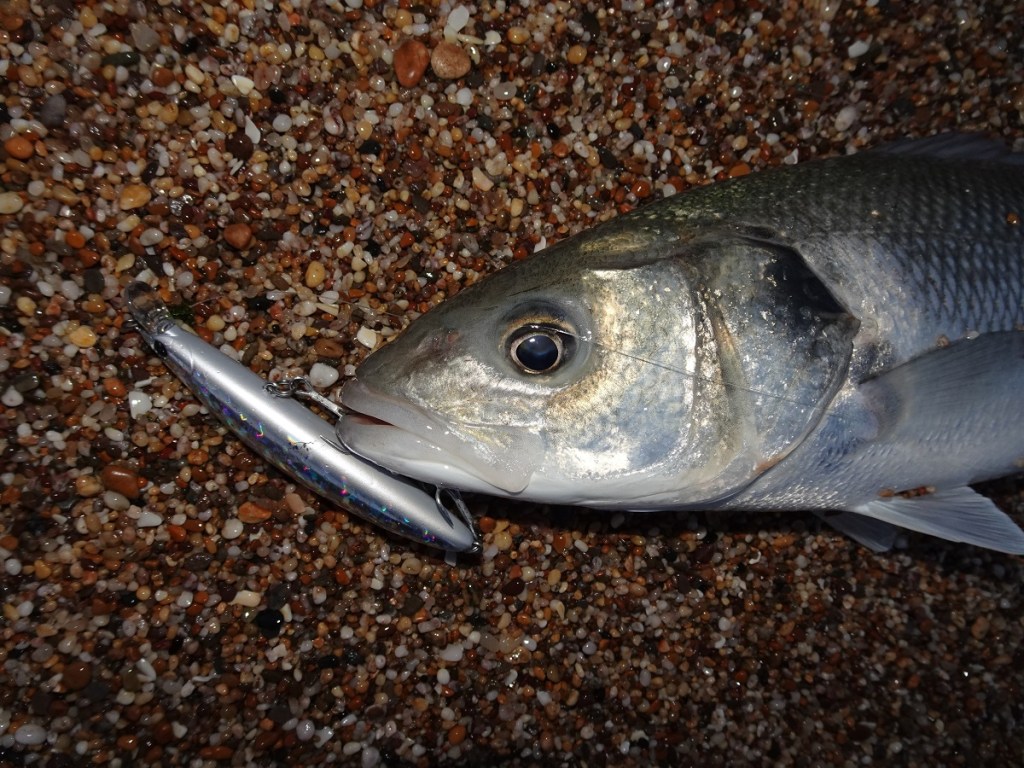
Heads Up… Or Down…?
A month-by-month synopsis, in addition to how the Biotic (Living Things) and Abiotic (Non-Living) Factors influence bass behaviour is something that I cover in great detail within Chapter Three of my 2nd book: Bass Lure Fishing – A Guide’s Perspective Volume 1.
Most certainly, when it’s peak ‘sand eel season’ in May through to June (as the sea temperature rises at its quickest), or sprat and mackerel time during the August and early-September (when the water is at its warmest), my choice of lure will reflect, quite literally, what the bass are most likely to be fixated upon, which of course something actively swimming in mid-water that is shimmering and glistening.
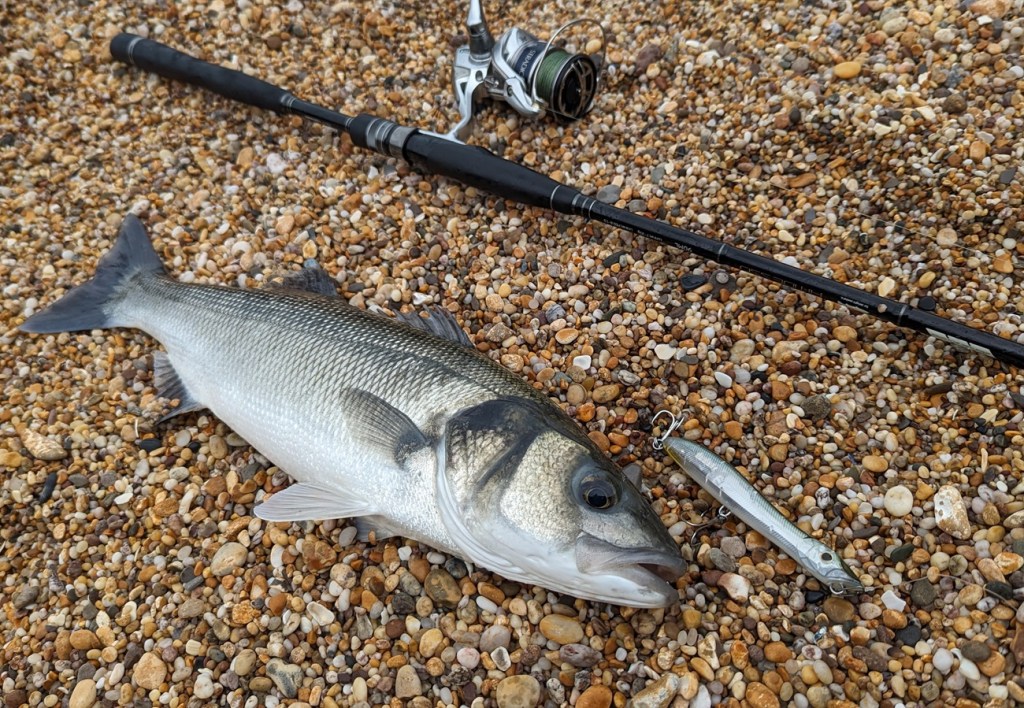
In the scenarios above, when the metabolic rate and associated energy levels of our quarry will be high, the bass will most certainly be ‘looking up’ – as this is where their prey will most likely be. But early in the season, and even more so in my experience, late in the season (December through to February here in south Devon), it’s as if the bass are hunting with their ‘tails up’, and by virtue of this, they will have their ‘heads down’ whilst searching for their meal…
Crabs v Fish
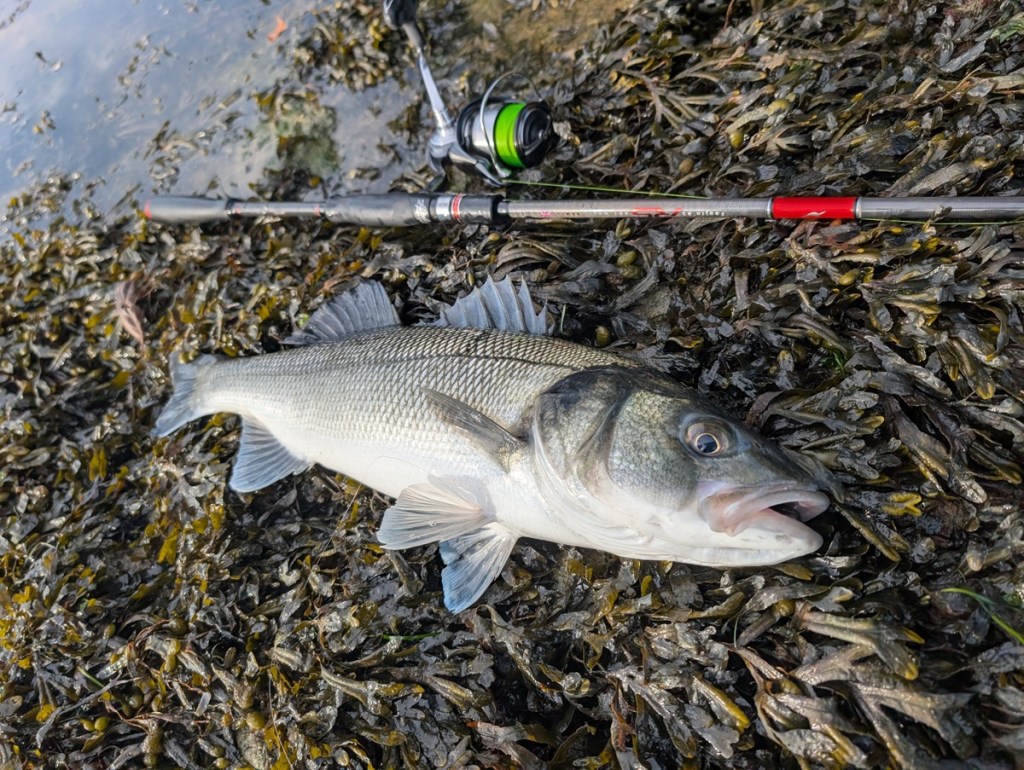
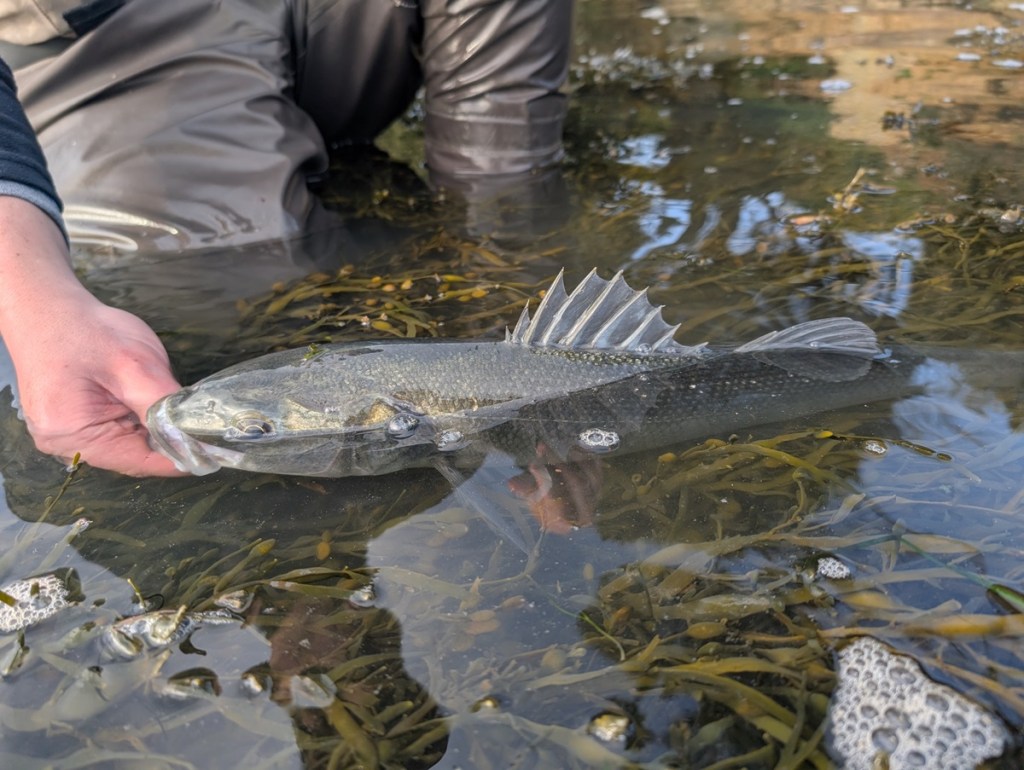
I touched on estuaries within the caption of the first image above because I find it very interesting attempting to decipher just what attracts so many bass to take up residency within them – be it for a few days indeed or few years! My view, and that of many other bait and lure anglers, is that, primarily, the resident or territorial bass (that are present all-year round in some southern UK Counties) are intrinsically hunting for crabs a very high percentage of the time…
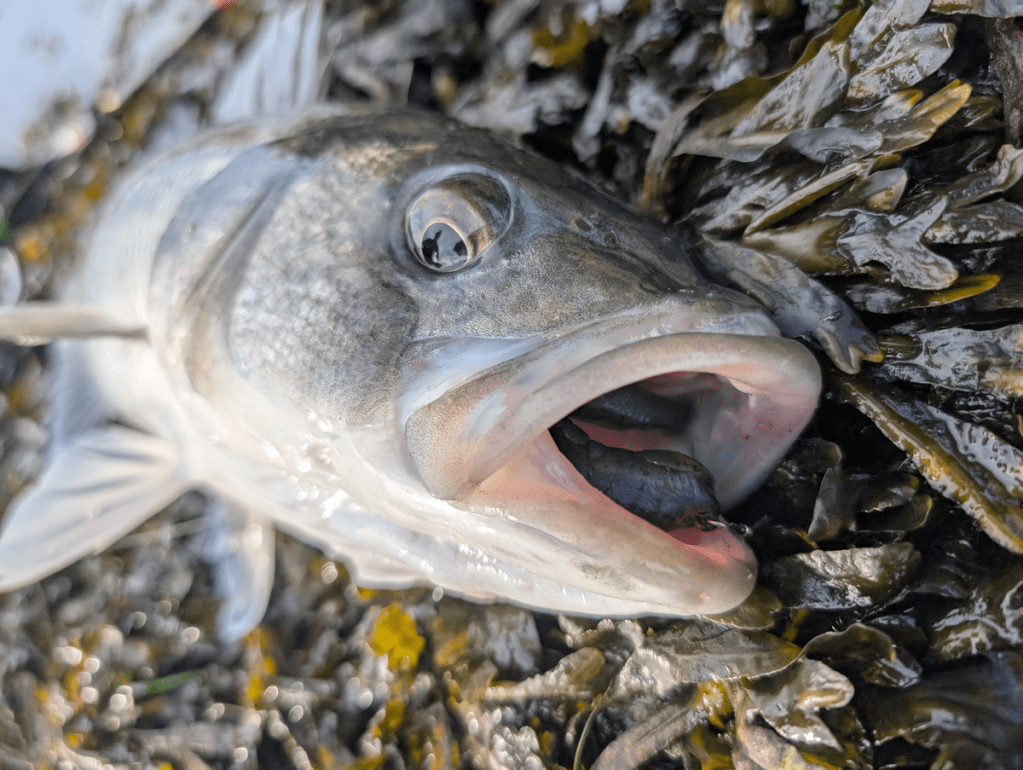
Adding to the paragraph above, from what I have experienced, it is only when transitory bass corral the bait fish shoals (sand eel, sprat, mackerel, herring, etc.) into the river systems to join the resident bass that both begin to feed up on what is a ‘bonus bounty’.
And why wouldn’t they! Lots of hapless food items gathering for protection, especially in the more protected, clearer and calmer waters of a sheltered rive system. Somewhat ironically however, in performing what is perfectly normal behaviour, they are in fact highlighting themselves to predators, becoming far more vulnerable to attack…
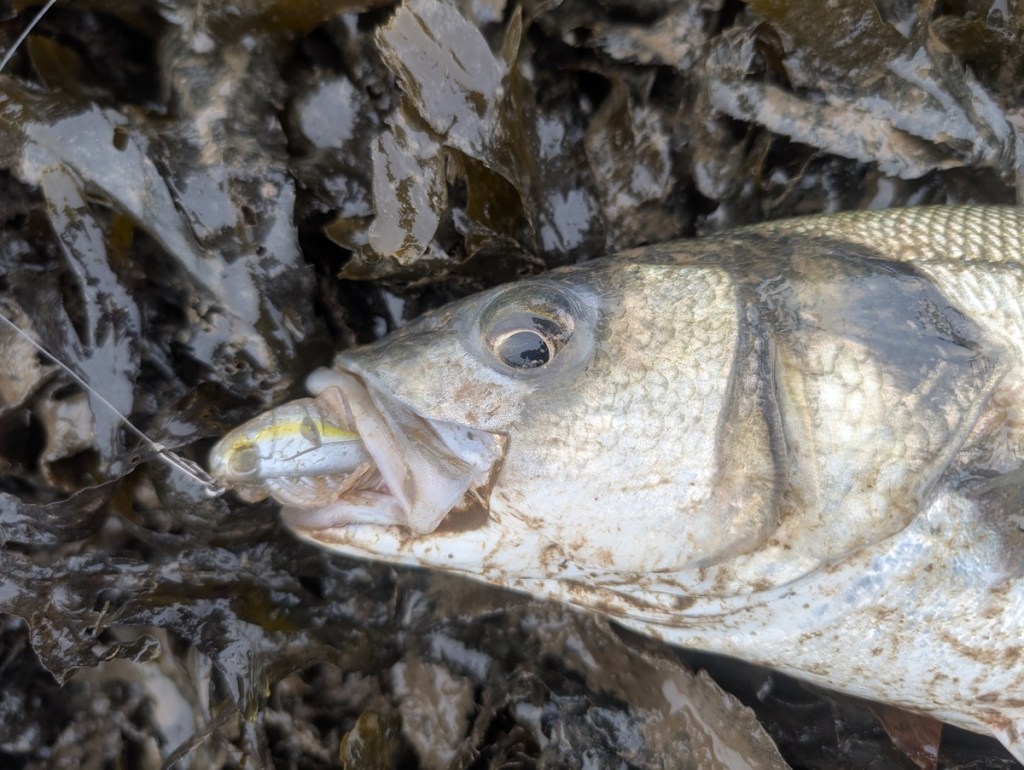
So, Crabs (and yes, Prawns) vs Small Fish – more especially shoaling variety swimming higher in the water column, but also those that dwell closer to the seabed such as gobies, blennies, and butterfish. Is there a correlation between the flashy, or fast-moving gaggles of silver fish dwindling in numbers as we head into winter, and the bass switching their attention to slower moving (potentially crawling) food items as their metabolic rate decreases with the lower air and sea temperatures…?
100% Yes. It is these possibilities and thought processes that I covered within the ‘What The Future Holds’ Chapter of my 3rd Book: Bass Lure Fishing – A Guide’s Perspective Volume 2 (released back in April 2022) that we have gradually began to employ this season – to positive affect no that the weather has gone downhill!
Tactics and Locations
Now that you’ve read this far, what you really want to know is: how exactly was Nathan’s beautiful bass caught? Well, at the time of writing (mid-December 2024) in the course of my guiding and personal fishing endeavours (in which I have enjoyed a fantastic series of sessions fishing with the creature baits this past week) outside of fishing in water that is less than 18″ deep, there has been a noticeable lack of attention in our surface lures, or anything indeed retrieved quickly sub-surface.
Therefore, in the most simplistic way I can write it, below is how I personally use, and how I have asked my clients to utilise the Megabass Sleeper Craws that we have been using of late (not that Nathan required any tuition as he’d already enjoyed significant success with them and the prawn imitations I must add prior to this session):
- I/We are casting, retrieving, and then moving after each recovery of the creature bait, searching out the kind of ground where a bass will be positioned such as weedy margins, clumps of weed and rocks, and those standalone features.
- Furthermore, if casting and moving isn’t possible, then look for the inter-tidal zones described above that are positioned just outside of a main ribbon of current. It doesn’t matter if the current is ebbing of flooding.
- In regard to the retrieve style. I do like to ‘tether’ the lure as it enters the water, so that it makes as small a splash as possible, before descending in a more of a controlled manner – arousing their interest and attracting them to the lure as it hits the seabed…
- From there, I will hold the rod tip up at 45o and at an angle that enables the braid to hang directly under it, as I find this aids sensitivity and a ‘feel’ for any plucks or taps. Place yourself out of the wind if possible as this will be a lot easier to achieve.
- All I am doing once the lure is the seabed is turning the reel’s handle around a half to two-thirds at a time, whilst gently lifting the rod tip twice by perhaps only 5cm as I make that turn. I will then pause for two seconds, before making a very slight movement with the rod tip, without turning the handle this time, before pausing again for a couple of seconds. I then keep repeating this.
- So far, a good percentage (70%) of the takes (that can be a gentle tap or a pluck, as the bass picks up the lure, followed by a pull much like a wrasse taking a piece of ragworm would you believe) occur within the first 10 seconds of the retrieve – confirmation that the bass are acutely aware that something has entered their domain, even in water with very little clarity.
Go and give it a go – you might just surprise yourself by pulling out a beautiful winter bass!

2025 and 2026 Availability
After a highly successful first season of ‘some weekends only’ guiding, my 2nd Guide Joe (who you can read about here) has recently released his 2025 Availability which you can find here. Note that these dates (especially his 3 Day Packages) are getting snapped up quickly.
Furthermore, within the next fortnight I will also be releasing my remaining 2025 (literally half-a-dozen dates) to the wider public, alongside my confirmed 2026 Availability – all of which encompass my 3 Day Package Dates, Guiding Days and One-to-One programme. You can find the Prices and Information Page here.
So, if you would like to be kept informed of all of the above please do complete the Contact Form on my homepage here, or you can fill out the form below and I will respond as quickly as I possible can:


Thanks for reading.
Marc Cowling
South Devon Bass Guide Ltd


