


Client Catches – So you’d like to target the big ones…?
“Do you think you can specifically target big bass on lures?” It’s not a question I am asked very often (which does surprise me actually) but I was asked it during my appearance on The Lure Fishing Podcast with Cormac Walsh almost 18 months ago now. Incidentally, if you’d like hear that interview and my dulcet tones talking all things bass related, you can find it here.
But to spare you listening to nearly an hour of me ‘rabbiting on’ I’ll save you that horror (I hate listening to myself speak!) by revealing my answer, which was… ” Yes, by fishing early and late within your respective seasons (geographically speaking), in darkness (over a reef system on the open coast), and also within estuarine environments under certain conditions (when there’s very little water in them essentially).
Now however, I would like to officially add another strategy to the list above: the utilisation a ‘popped’ surface lure.
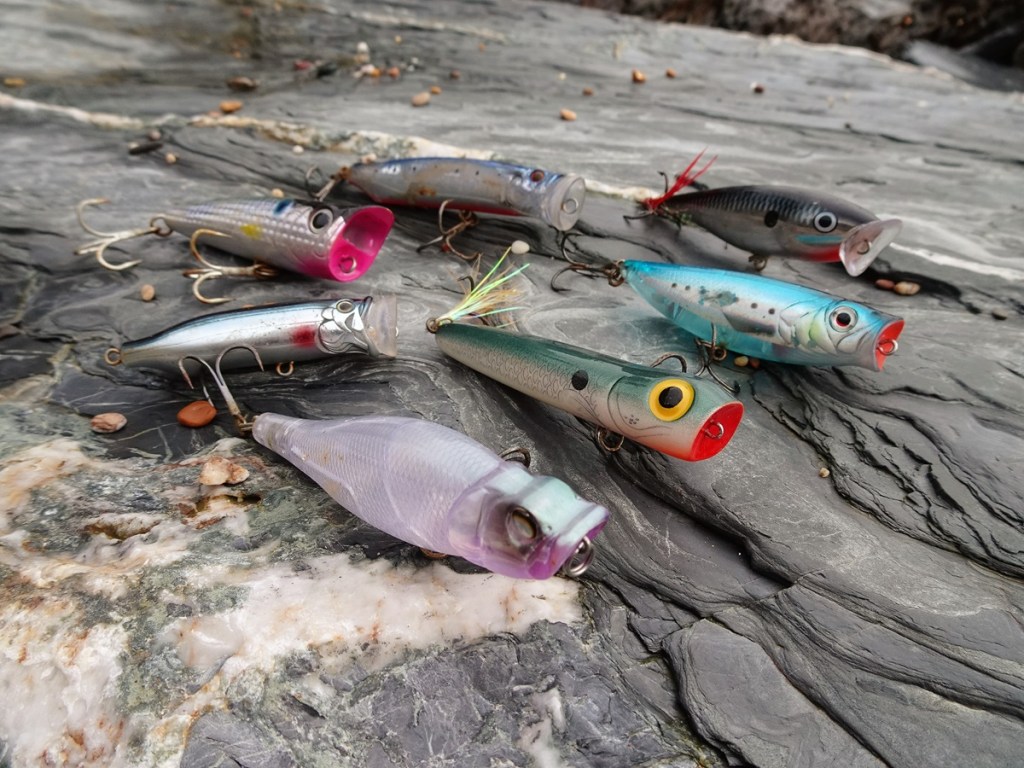
Designated
Note that I don’t say a ‘designated’ popper. Because even though they are absolutely deadly, there also a number of surface lures that I would and have previously termed as a ‘hybrid’, in that they can be worked/retrieved in a sliding, snaking, zigzagging fashion as well as being ‘popped’ – with the star of this show, the wonderful Whiplash Factory Spittin Wire being one of them.
So with ice rink-like sea conditions, in tandem with a beautifully swift and laterally running tide during this guided session with Rob (who you may recognise from ‘My Year in Review 2023 – Client Catches post here) I couldn’t wait to teach him the virtues and the spectacularly consistent attributes of lure ‘fished’ in this manner.
Very cool!
First and foremost, when your attempting to ‘pop’ a lure in the flow you will need to cast ‘up-tide’ of your stance so that it is naturally brought back towards you. Further, you’ll also need to ensure that the only time(s) you affect the lure’s movements with your actions is when you twitch your wrist and pop it, as outside of this all you’ll be required to do is take in the slack line (due to the lure travelling towards you).
Personally, I find this easier to achieve with the rod tip held up almost vertically so that, wind permitting of course, as much of the line/braid is out of the water as possible – in contrast perhaps to when you’re walking the dog when the additional tension created by the line being in the water assists the angler greatly. And here’s the REALLY cool thing! Most, if not all of the often savage lunges at the lure will occur when it is essentially lying motionless on the water’s surface as it drifts…

Natural
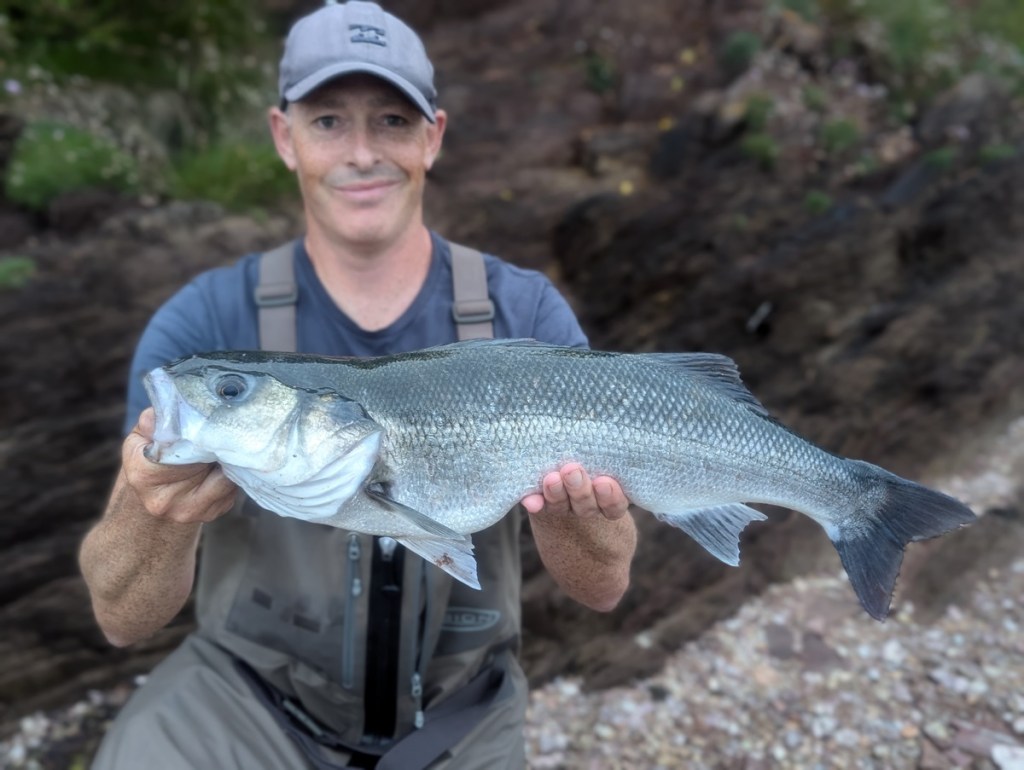
Onto the capture in the featured image, in addition to why I firmly believe this is a ‘big bass’ tactic… I’ll start with the latter, and if you can imagine a hapless, struggling fish that is gasping for its life and being swept by the current, or indeed a gaggle of tiny bait fish being helplessly carried and over-powered by the tide, they will be shifted at precisely the same speed and momentum as the force transporting them – something that to a bass appears extremely natural.
Can and does a larger bass ‘bully’ the smaller ones out of the way when it comes to an easy and apparently larger meal? I think so yes. Moreover, I also believe that an older, wiser bass is far more adept at picking off this type of offering – especially when the retrieval of a regular surface slider is difficult to achieve (and rather unnatural) under strong current conditions, and it perhaps isn’t performing as it should or would ordinarily.
Instant
Onto the capture of the 67cm bass in the featured image then, and for someone (and Rob won’t mind me writing this) who struggled to catch bass surface lures, let alone the slightly trick to work Spittin Wire up until the start of last season, he has certainly made up for it in the past 16 months! Indeed, I recall that it took only a couple of attempts for him to get the Spittin Wire gently spattering in the oily slick with, very importantly, a decent pause of around two to five seconds between singular, or those deft double twitches of the hand, wrist and arm.
Something else that I vividly recall, was the way in which Rob’s bass annihilated the brilliantly worked lure – and trust me when I say this as it isn’t easy with one if these hybrids. But then they do create a less conspicuous ‘splosh’ on the surface when popped, and as I’ve written many times now ‘less is often more’ when it comes to these mercurial predators. Make a lure appear too obvious and you run the risk of repelling them, yet pique their interest and place some doubt in their mind and they are likely to be far more positive is my mantra.
Amazingly, it took all of ten minutes of administering a technique that has totally alien to him for Rob to connect with what is now his new personal best bass (his previous two were landed during guided sessions with me I am happy to report) – instant confirmation that both the tactics and the technique were spot on!
Oh, and Rob did hook another bass of around 5lb by my estimation, that evaded capture at the very last moment when the hook loop pulled out of the lure – just as well it wasn’t the big one as we’ve lost too many already this season, due to some rotten luck that I’m positive will begin to even out.
Thanks for reading.
Marc Cowling
South Devon Bass Guide Ltd

 South Devon Bass Guide Ltd