

Our Recent Catches – The Constant Classic…
We’re getting to the business end of the season down here in south Devon now – and it’s bloody exciting I can tell you! My more recent guided sessions at ‘South Devon Bass Guide’ have seen some brilliant bass landed, both in regards to numbers and the average size – with three over what constitutes as a ‘red-letter event’ (a bass at or over the 60cm/5lb mark) landed amongst many others in the 3-4lb range within the past half-a-dozen or so sessions. You can catch up with my updated gallery of ‘Client Catches/2023’ here.

But before I attempt to write a succession of ‘quick fire’ blog posts with a view to seriously ‘catching up’ with the majority of client captures so far in 2023, I am acutely aware that I haven’t written anything about my personal forays, therefore you’ll get a flavour of how I’ve been getting on within this post, plus via the ‘My Catches/2023’ Gallery here. Essentially though, I wanted to write a piece in relation to the significant number of bass that my clients and I have landed on what is still arguably the ‘classic’ or ‘quintessential’ bass lure – a floating, hard, diving minnow.
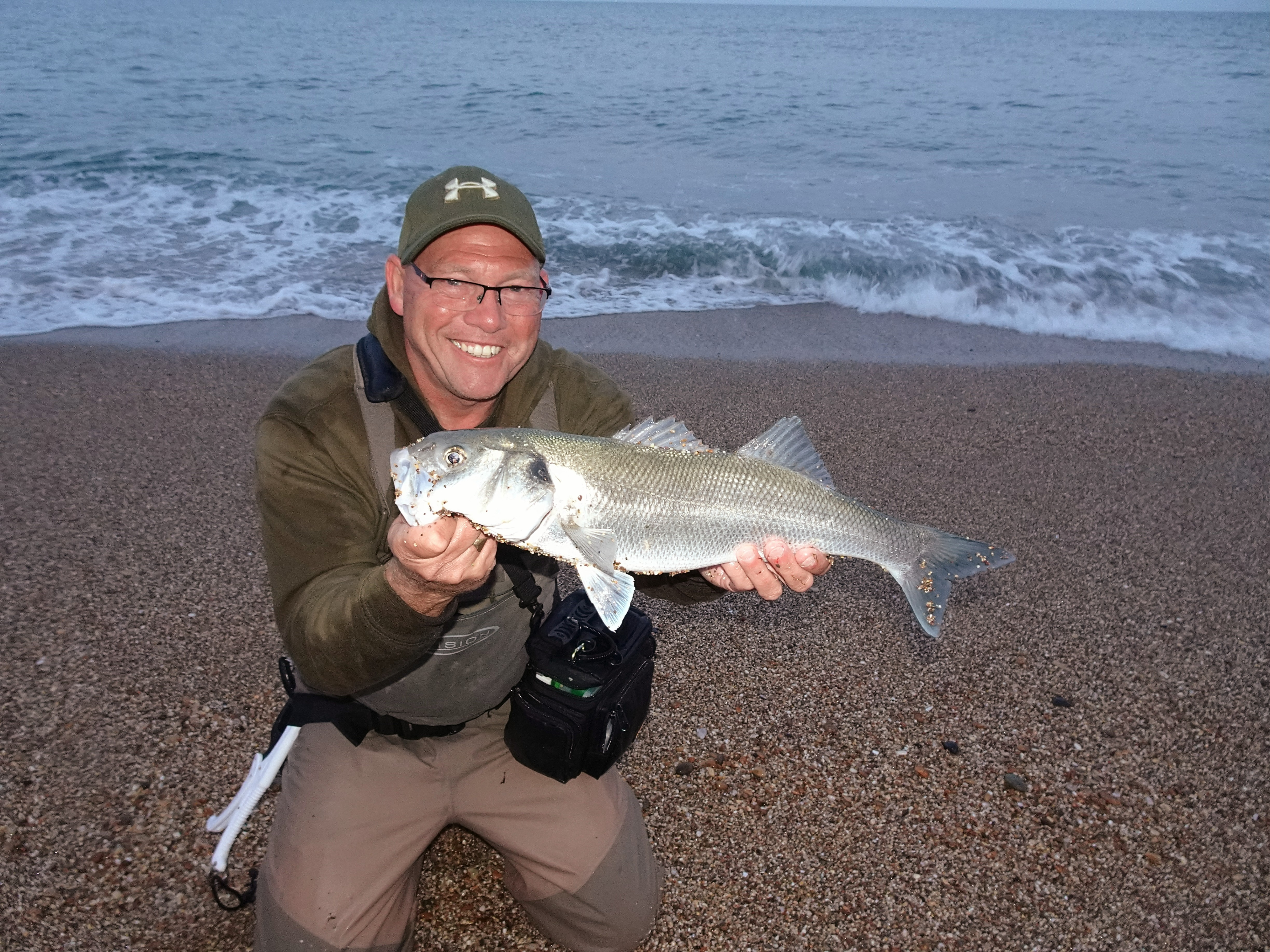
Yep, these are the lures with a slanting snout or vane on the nose in case you need to dust them off or fish them out from the garage! So, interspersed within the narrative herein, what you’ll find is a number of ‘slideshows’ that display the capture (the good old grip ‘n’ grin) in addition to the hard minnow that accounted for it, starting with the beauty below landed by Adam on the IMA Hound Sonic 100F in the ‘Silver Scale’ configuration here.


My favourite Lures
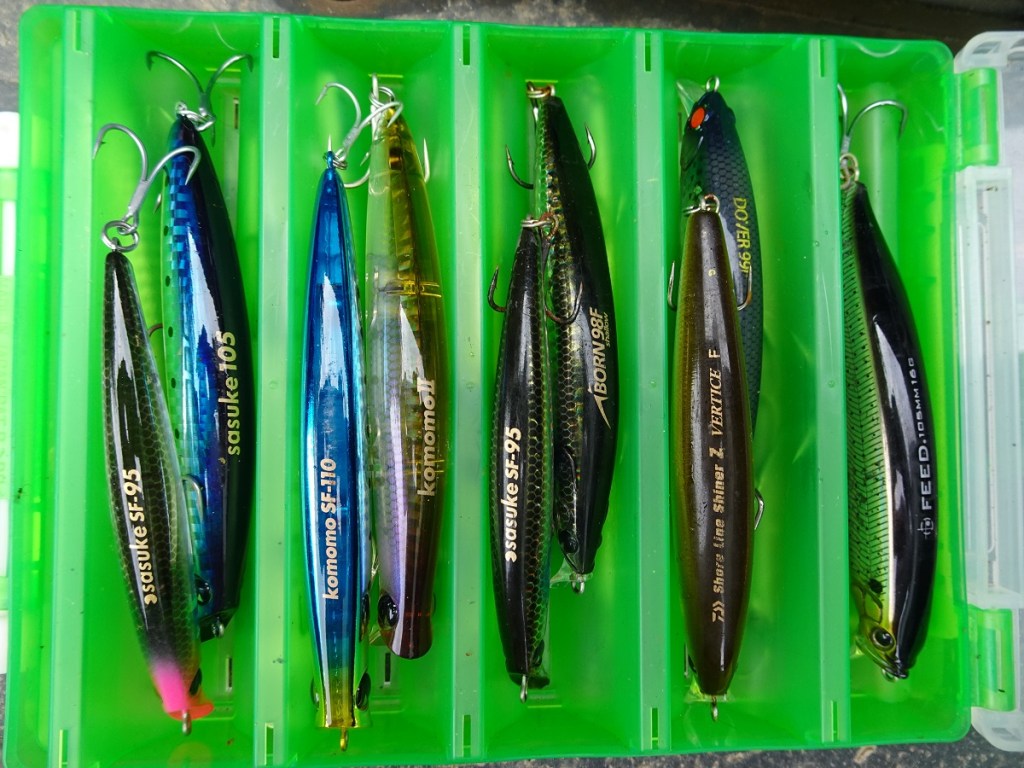
I enclose a photograph of my personal and current double-sided lure box in regard to this type of lure below. And as you’ll quickly be able to decipher, I do have a penchant for IMA and Daiwa hard plastics in particular, with patterns such as the APIA (Dover 99F), Megabass (Zonk 120F SW), Maria (Squash 95F), Longin (Hi-Standard 120F) and Tacklehouse (Feed Shallow 105F) also shoehorned in for good measure, and in case I require that ‘special lure’ for the situation or conditions… We’ve all got them haven’t we!

Comparison
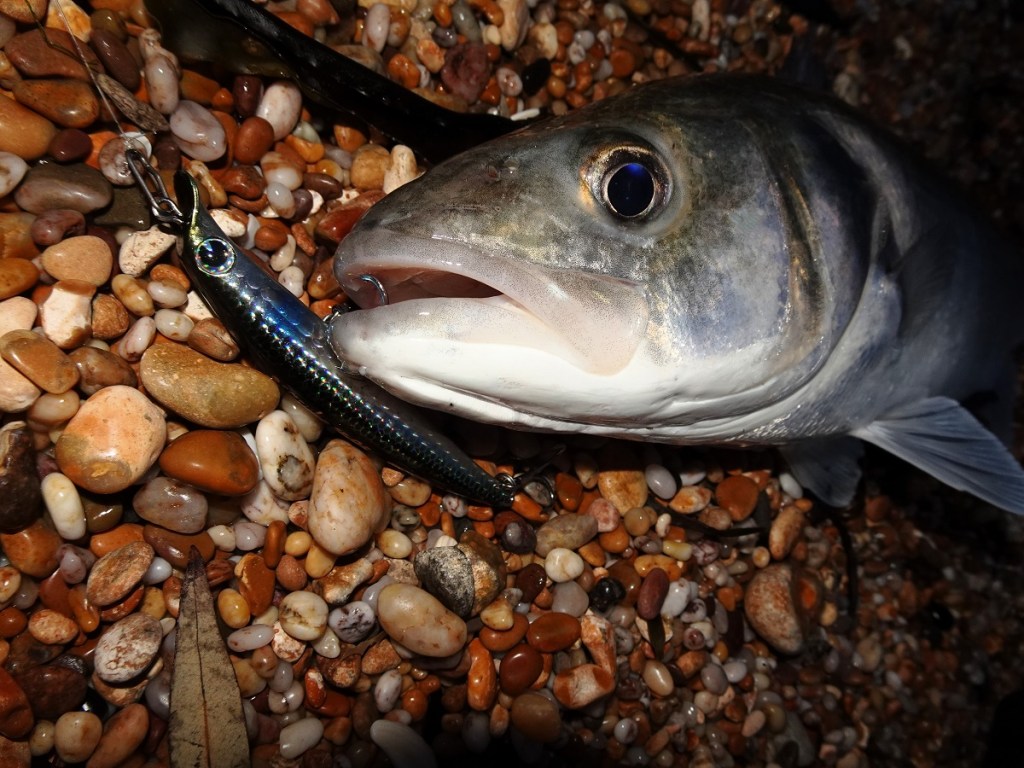
When I say a ‘significant number’, what I should really be saying (writing) is that in comparison to recent years, say, since 2017, where my inner-estuarine incursions and night lure fishing escapades have overtaken my daylight, ‘rough ground and equally rough sea’ endeavours, the humble hard minnow has most definitely made a bit of a comeback of late… Here’s one for me (below) that walloped the IMA Sasuke 95F in Bora (here) during a dawn session when only something representing the sprat/whitebait they were fixated on would appeal.

Now, there are all manner of reasons why we’ve caught a fair few bass on the hard stuff this year, but the obvious one is that, plainly and simply, I have been asking/instructing my clients to utilise them more often! OK, so there’s the reason then – end of blog post! Not quite, as the reason(s) we have have been using the likes of the lures listed above is because the weather and sea conditions, and then in turn, the type of venue I have decided to fish or guide upon, have warranted, or indeed, dictated their use.
Options
Talking of comparisons then, and it has been a comparatively ‘windy’ year – especially since April and the start of many people’s bass lure fishing season. And although it has most definitely kept me off of some of my marks for longer periods than I would have liked, the varied orientation of this marvellous coastline means that, 99% of the time, I can choose to either embrace an onshore wind, or duck out of it. And if I choose to embrace it, these trusty lures will very often influence or even shape my approach to an entire session.

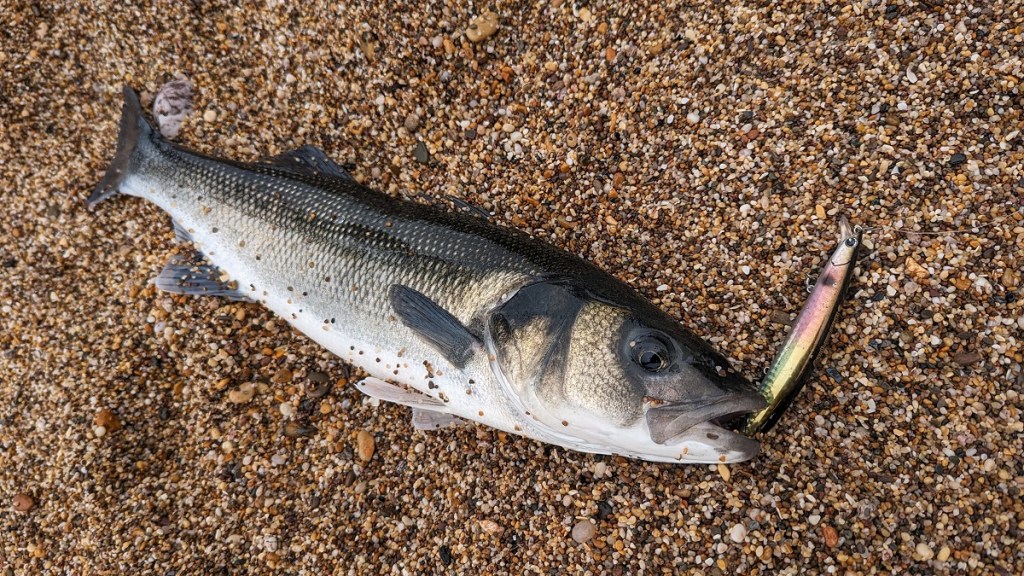
By day, if the wind is blowing moderately into or along the more rugged southerly and westerly facing sections of open coastline here in south Devon, then providing the swell isn’t too ‘iffy’, if the water clarity is also favourable, and if the risk of too much ‘crap’ in the water is low, I will consider my shallow, rocky, reef marks as a viable option. This was precisely the case when I latched into the corking, dark-backed bass (above) on an IMA Hound Glide 125 in the UK Limited Edition Aji pattern (here) within the backwash of wave eddying around a recently submerged rock.
Pleasingly, an easterly, or a north-easterly blast can also bring some exceptionally good bass lure fishing opportunities along the sections of sandy and shingle beaches that are festooned around the South Hams – meaning that I will always have an option if there is some wind or swell around, and it is ‘white water’ that I desire.
Territory
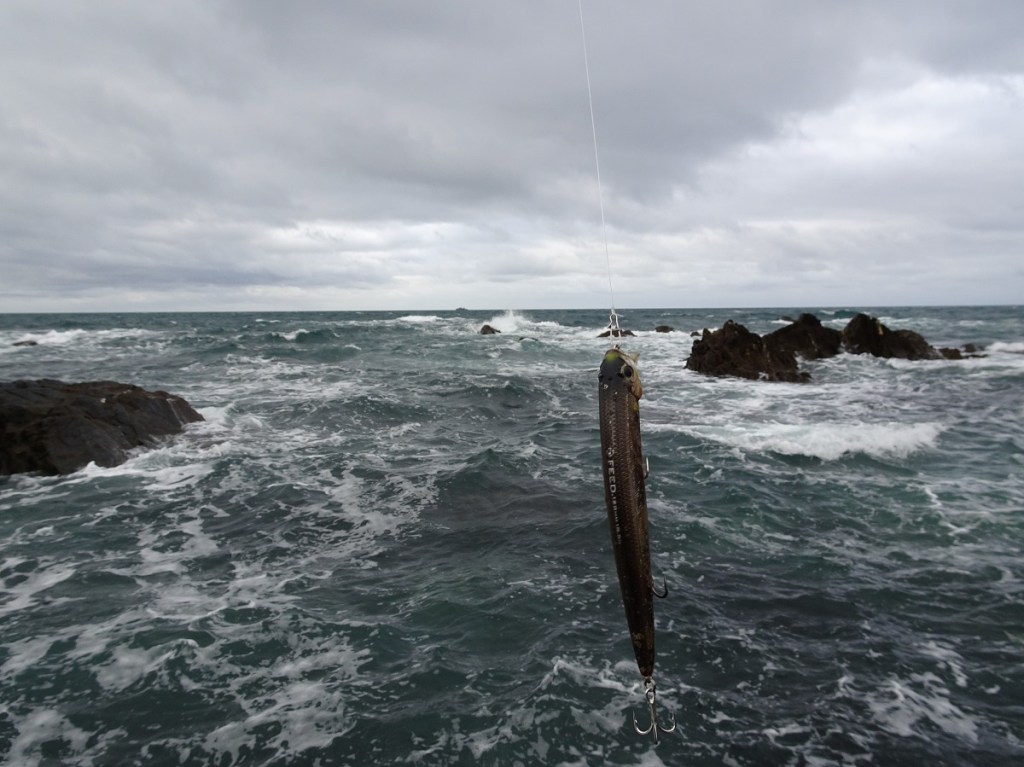
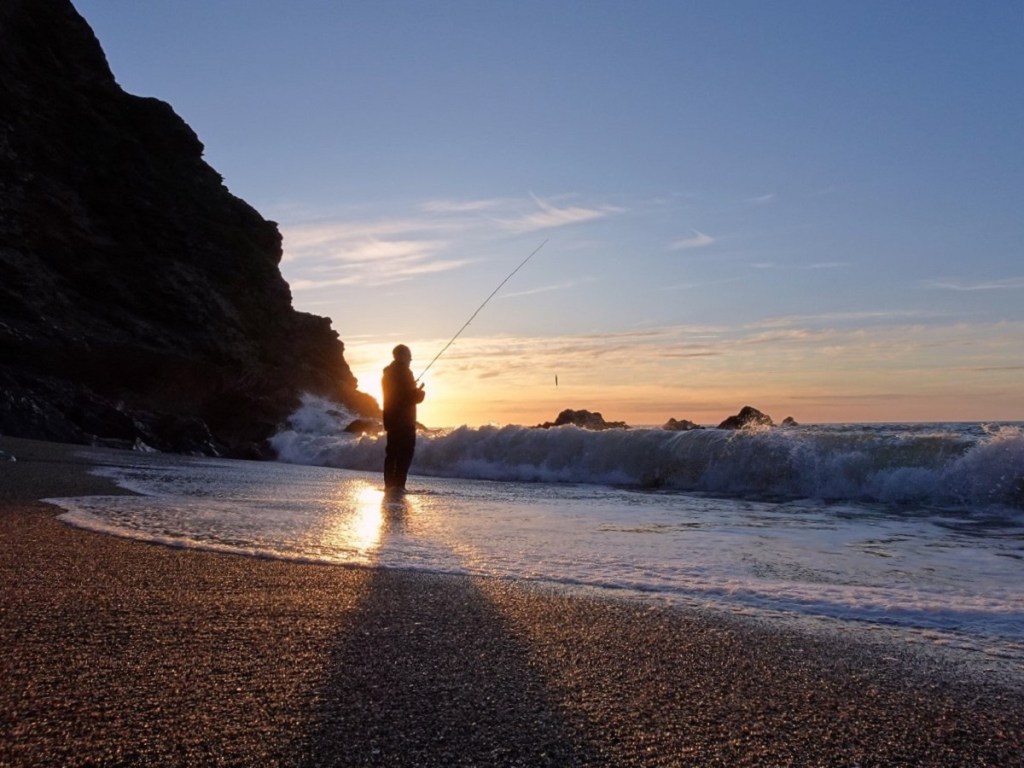
Just in case you’re reading this and thinking: ‘White water?’ What I’ll be looking for is something close to the two open coastal photographs above. From the rocks and over the reefs and into the gullies, a frothed up, fizzing, and aerated melee is absolute heaven for a marauding bass because it provides them with the ability to ambush or sneak up on their prey. In a nutshell, their powerful bodies, superb eyesight and armour plating mean that they were built for such scenarios, and they will take a full, predetermined, and indeed, an opportunistic advantage of these conditions.
Then take the ‘wave turning onto the beach’ photograph that I am rather proud of! Bass will be caught from shallow surf beaches most certainly, but do not discount either a slightly shelving sandy beach, or even more so, a steep shingle beach when the swell or even larger ‘wind waves’ (waves with a lesser length between the peaks, are more rhythmic, and therefore, more predictable) are either turning right onto, or are pushing powerfully up the shore.
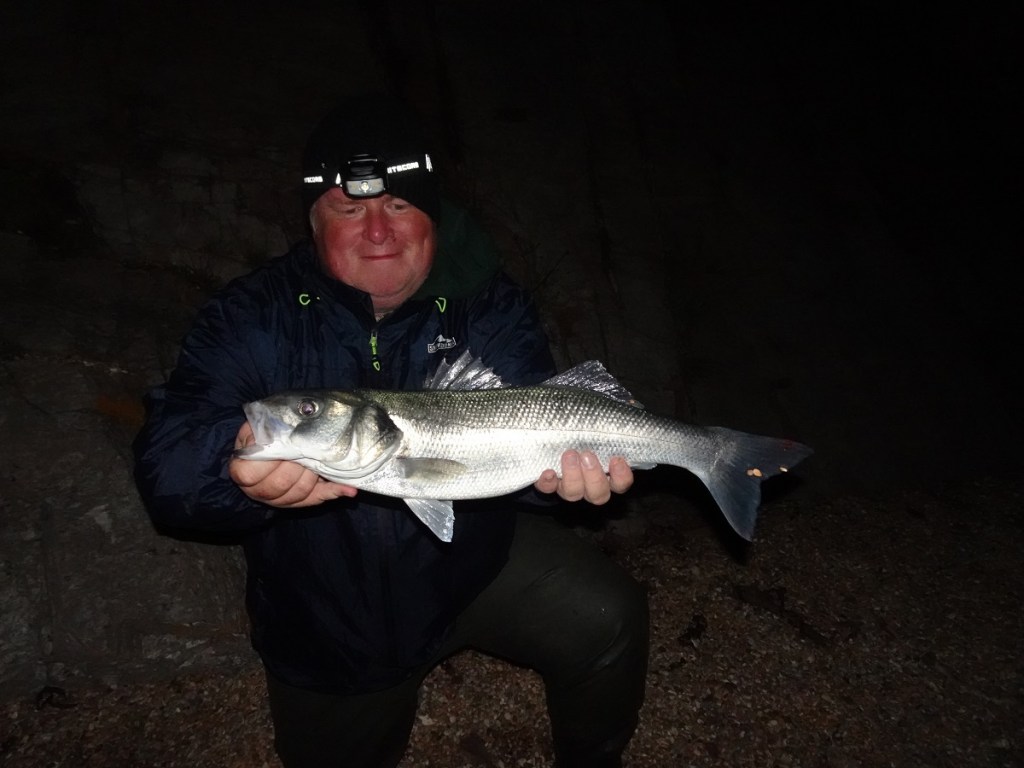

Clearly, I would recommend that you approach the sea conditions described and depicted in daylight – especially where any rocks are involved. Moreover, it goes without saying that from a guiding perspective, keeping my clients safe is paramount over any bass we will hook, therefore, as I am very often out with two or more clients nowadays I tend not to spend too much time slithering over rough ground in wet, windy and rough sea conditions.
Yet, from those very steep shingle beaches, when and where the momentum and force of the wave is stunted by the angle of the shore, then, providing I/we remain high up the shoreline and remain vigilant (not easy in dark granted, but I’ll elaborate by saying that if you fish close to rocks you’ll still be able to ascertain/see when a larger series of waves move through and react accordingly) then, as you can see from the slideshows above and below, casting and retrieving a lure such as the IMA Hound Glide 100F or 125F in daylight and darkness can be absolutely lethal!
Retrieving the lure along the ‘gutter’ or ‘trough’ of the beach is, in my experience, far more effective than blasting it straight out – as you need to consider where the bass are more likely to hunting and feeding. But either way, I would advise you to pay particular attention, and to retrieve the lure very intently the closer it gets to the shore.
Technique
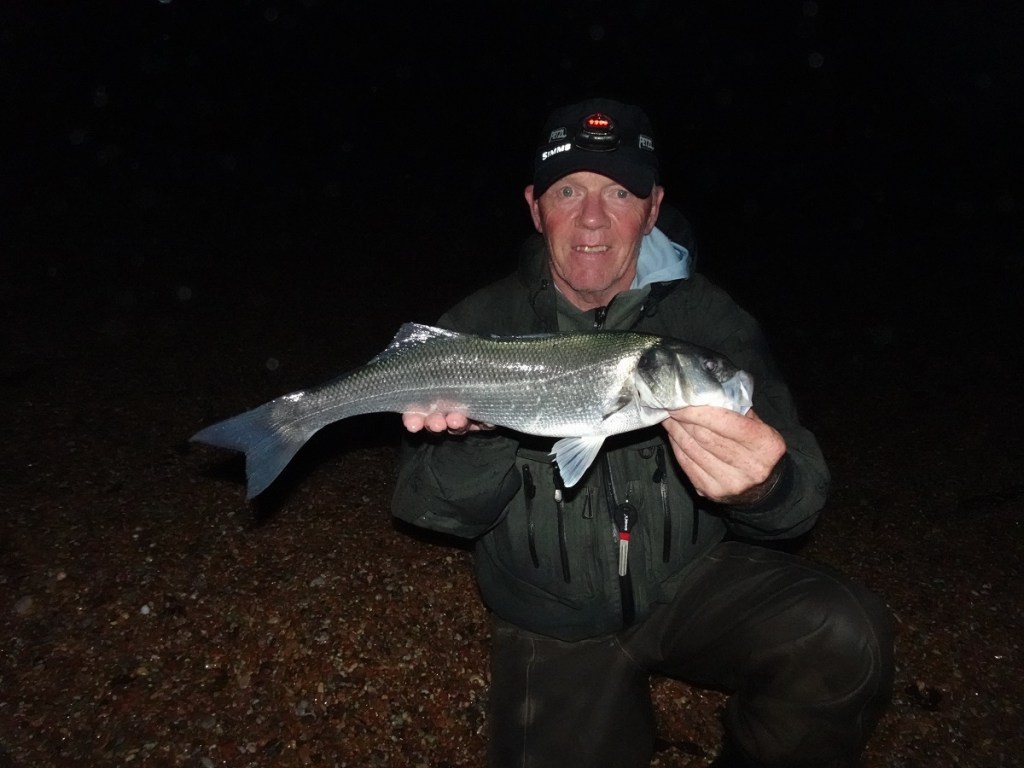
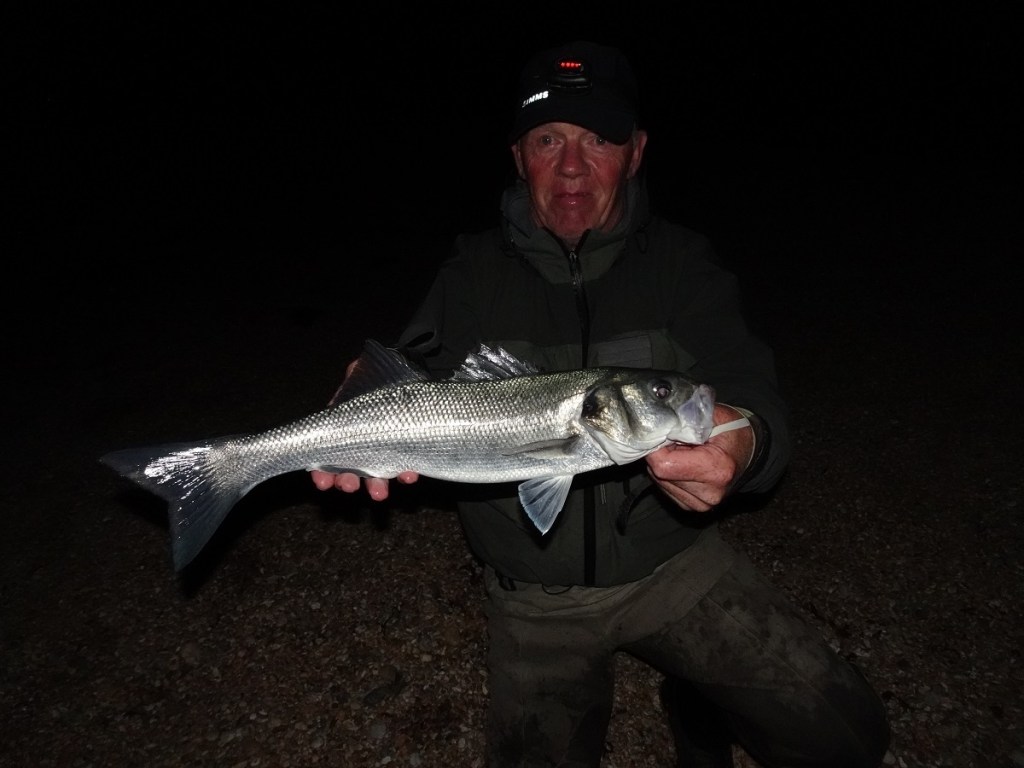
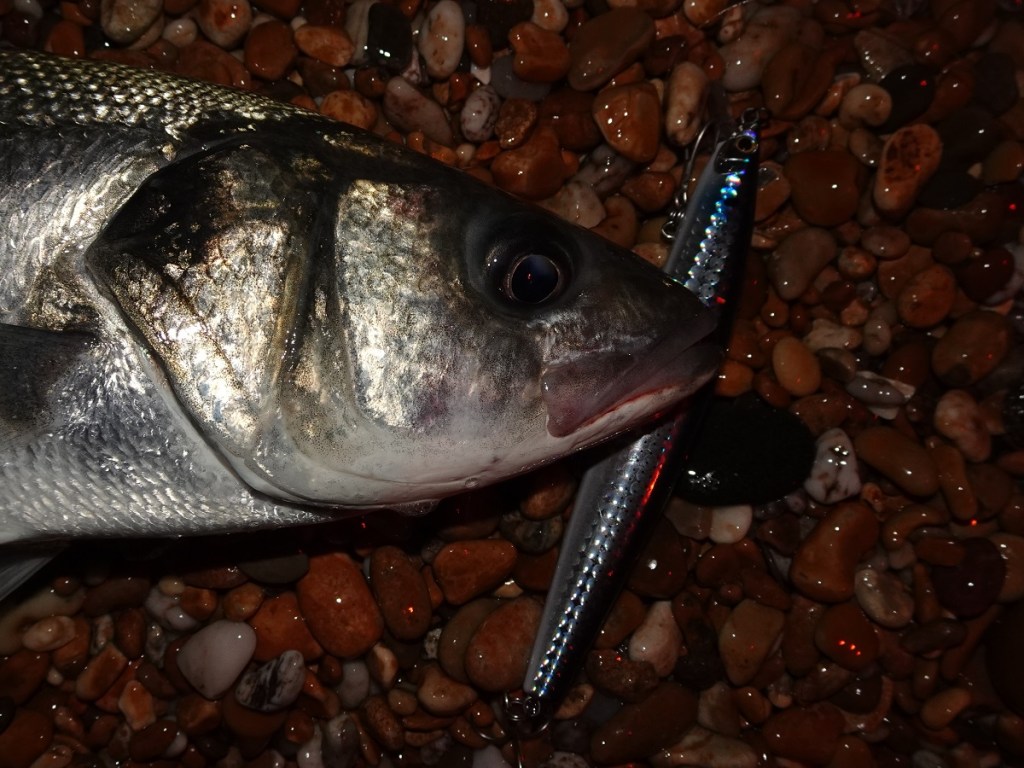
I’ve covered the lures and the territory so now onto the technique… The bass in the slideshow immediately above (that my client Baz landed within a haul of four of a similar size over two night sessions on the Shimano Silent Assasin 129F in Bora) were hooked literally where the wave turned onto the beach, so therefore right at the end of the retrieve – and yes, this frightens the life out of you!
You see, the key to when to utilise a floating/buoyant, hard, diving minnow leads me onto the technique(s) for their usage… As mentioned in the caption of the Tacklehouse Feed Shallow 128 dangling above some deliciously ‘bassy’ conditions further up the page suggests, when a degree of ‘control’ is required by the angler, be it from a casting or retrieving (or commonly both) perspective, turning to these lure types makes a lot of sense.
A lure that can be cast very accurately between rocky outcrops within a seething gale, and into the prime location tight into a frothing, bubbling section of water between them is a useful tool. Furthermore, something that ‘digs into’ the undertow of a surge of water smashing up and down the beaches described and that can maintain a specified trajectory both in regards to depth and direction – all of the specific lures that I’ve covered in this post are all brilliant at achieving this.

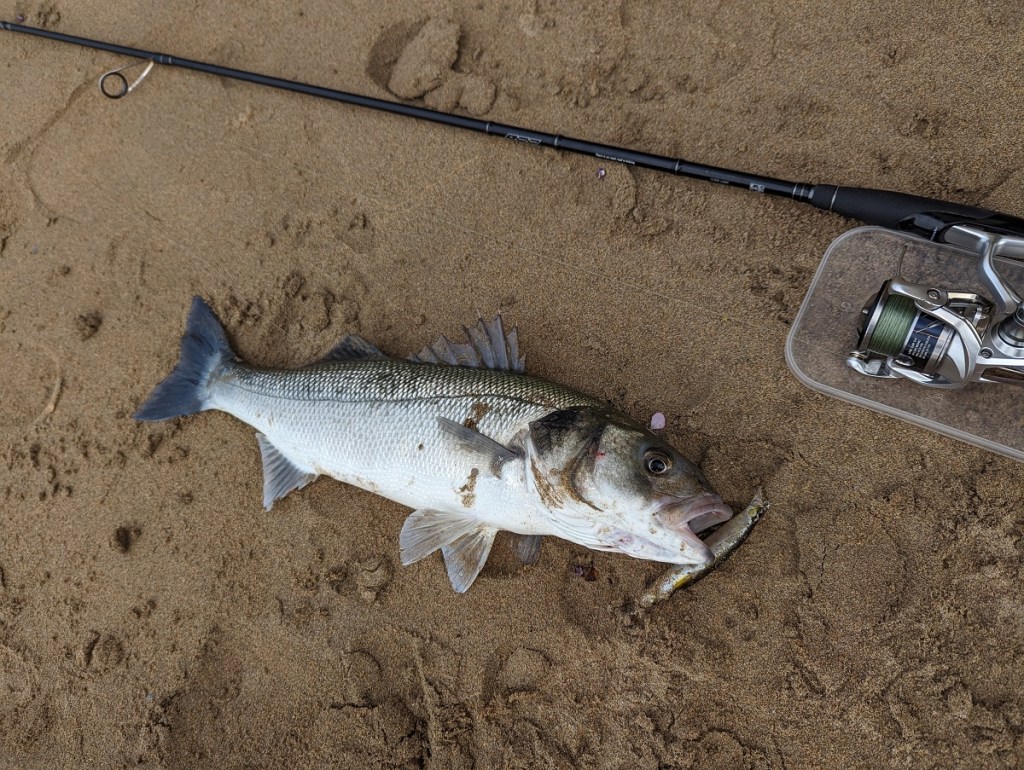

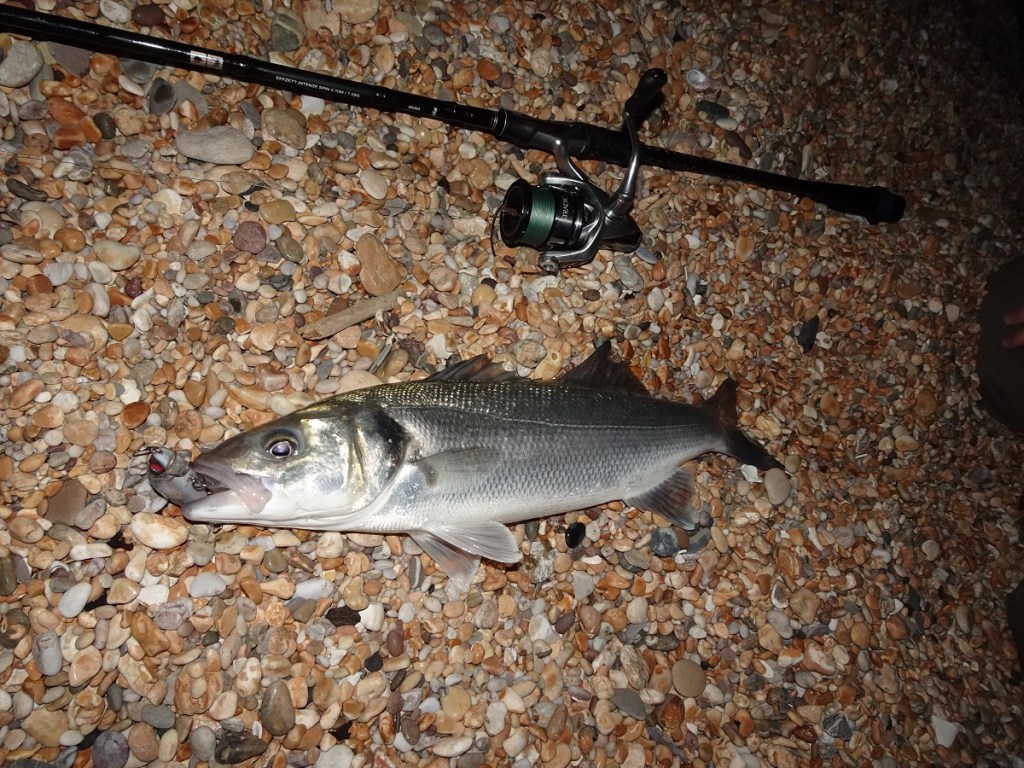

What’s more, when a laterally-running current is whipping past your feet and a heavily weighted paddle tail lure is still being overcome, or when a soft plastic rigged onto a jig-head is collecting too much weed along the seabed, we’ve turned to a hard minnow (such as the Daiwa Shoreline Shiner 97F Vertice or the sadly discontinued Savage Gear Manic Prey 90 that accounted for Ed’s fish above) in such conditions to keep on catching…
Nuances
To summarise then, as with all lure types, there are ‘Pros and Cons’ to their use, and/or indeed, a few nuances to consider such as the following:
Pros
- Long and accurate casting capability.
- In buoyant/floating form – relatively easy to manoeuvre around snags (rocks and weed).
- A predetermined depth (depending on the angle or size of the vane) can be fished.
- Their ‘swimming stability’ is excellent underwater.
- Brilliant in aerated, fizzing, rough seas where bass need to react instinctively.
- Great in fast running currents if/when required.
Cons
- Can ‘pick up’ a lot of weed.
- Too many hooks (I remove the middle treble if the lure is adorned with three of them, or use a smaller pattern with only two).
- I believe that in calm, clear, fairly stagnant (little in the way of tide or current) sea states that the bass will get too close a look at them in daylight – resulting in follows but less hook ups than in more confused seas or darkness perhaps.
Nuances
- You can just ‘turn the handle’ as it were as their movement (that wobble/wriggle) is intrinsic, however, adding in a few ‘Manual Triggers’ such a the odd twitch, pause, or bout of quicker turns of the handle will increase the anglers’ hook up rate.
- To maintain their movement in more turbulent sea states, you’ll need to either retrieve quicker as the wave ‘pushes’ towards you, or essentially ‘hold’ the lure in place within any undertow (which is very effective incidentally).
- You can ‘make’ a lure that is designed to swim at say 6ft under the surface ‘swim’ shallower by retrieving it with the rod tip up.
My Books
(Including my latest release – Bass Lure Fishing – A Guide’s Perspective Volume 2)


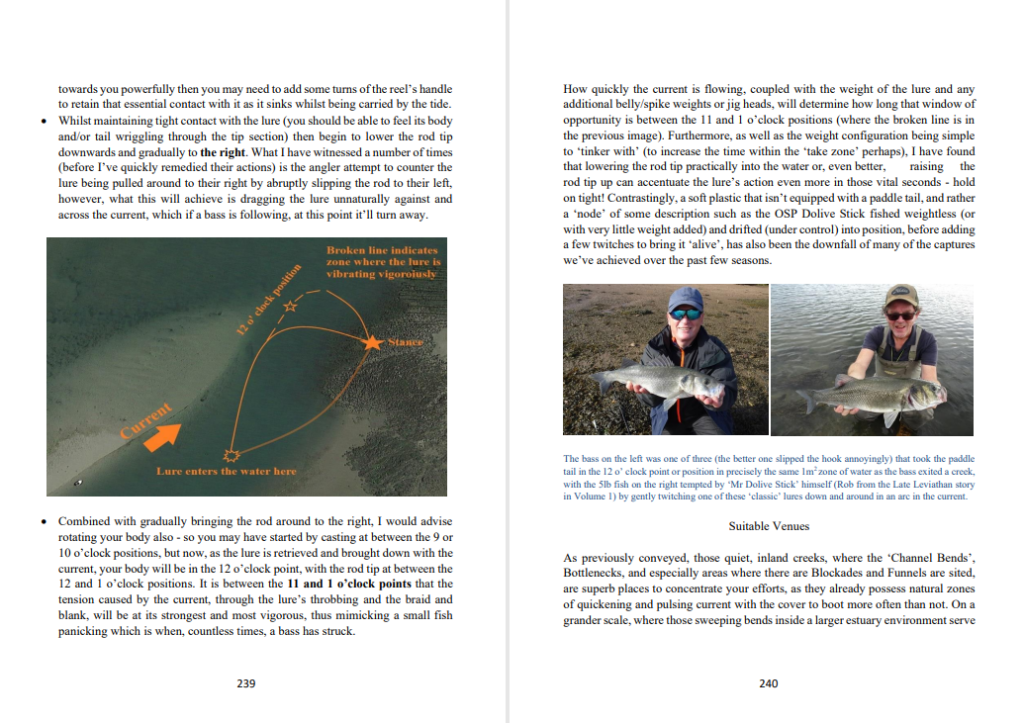

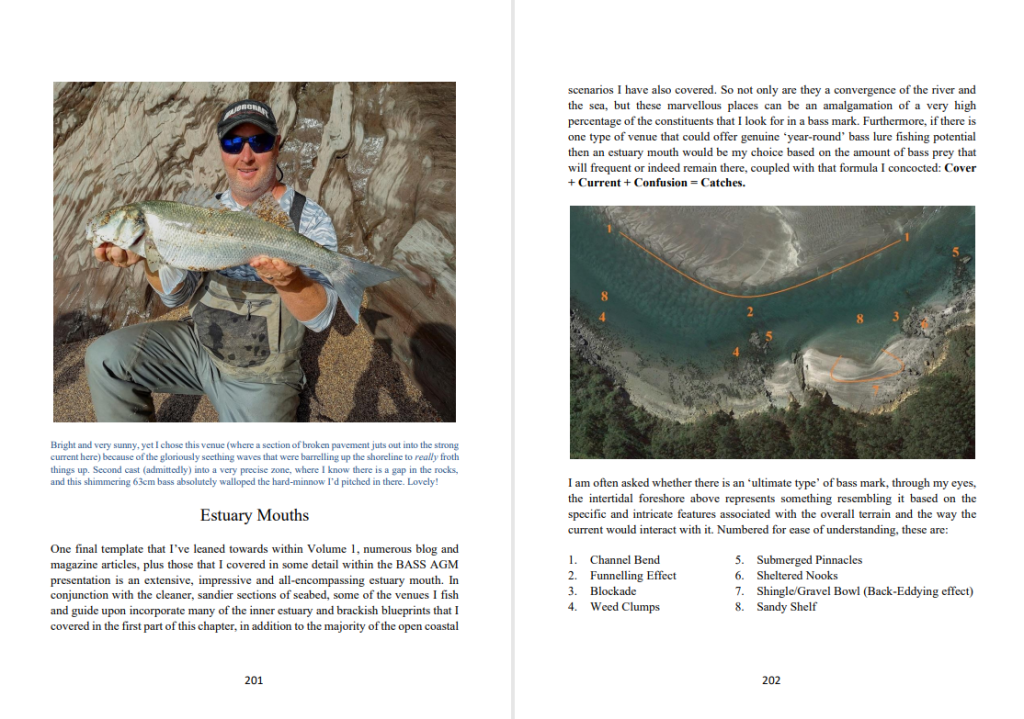

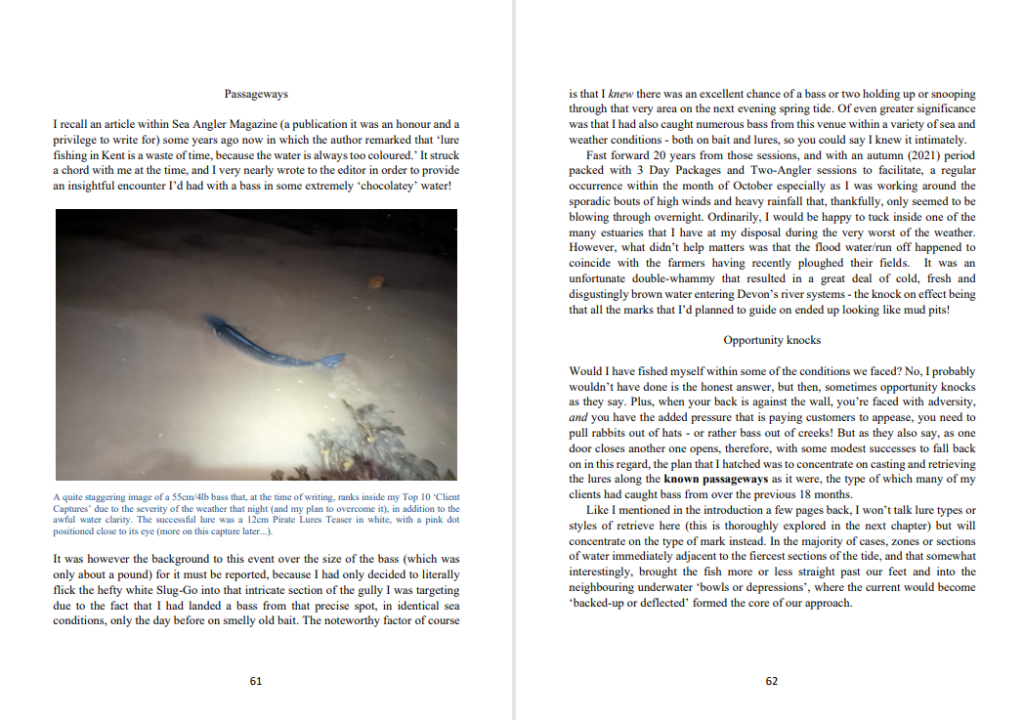


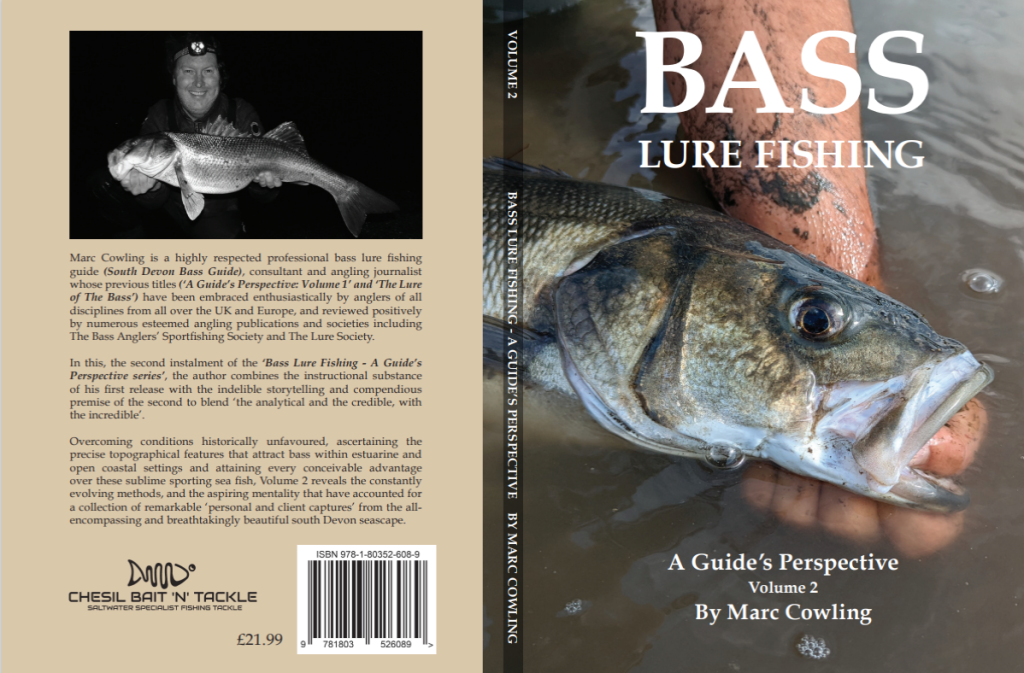
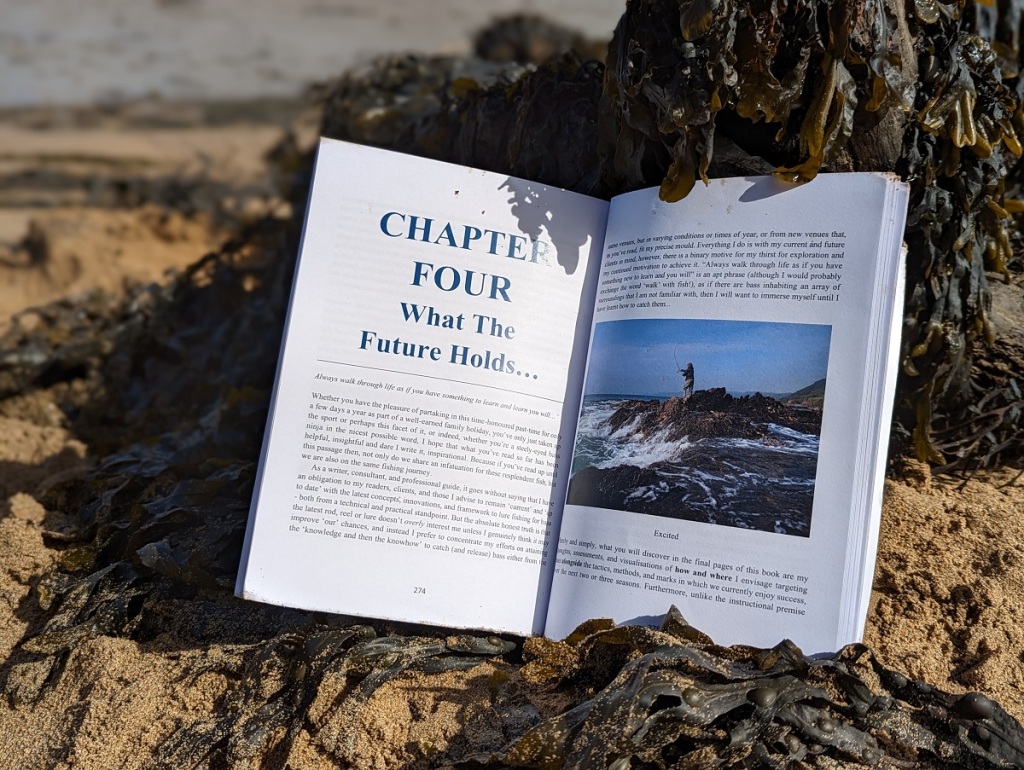


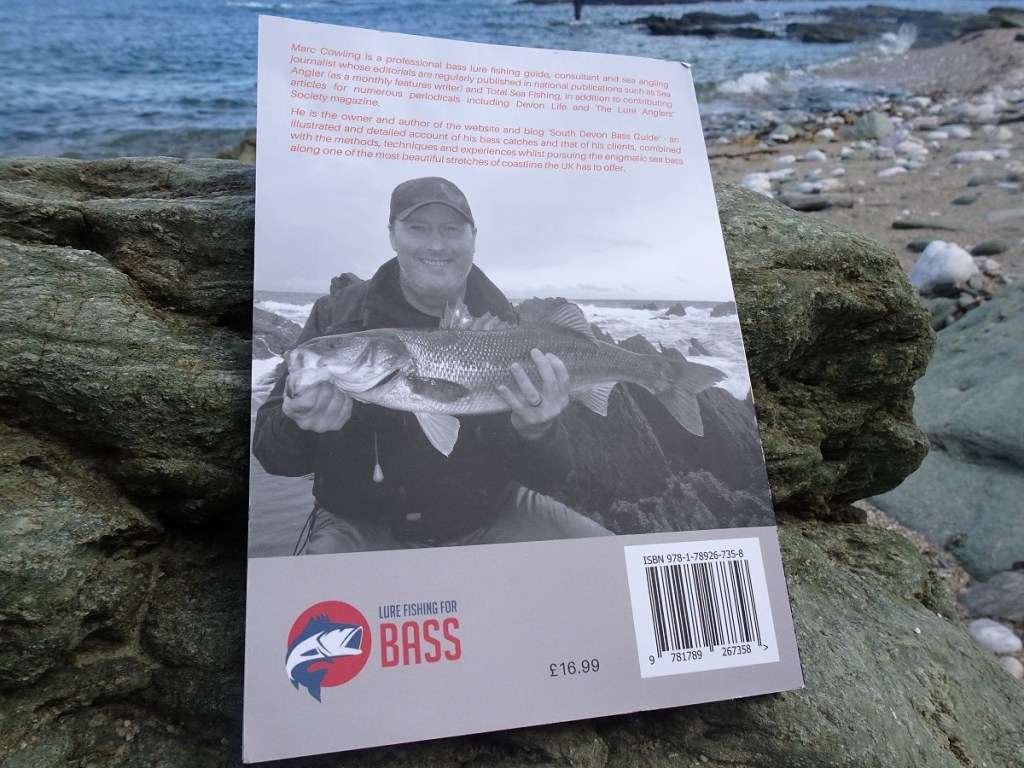

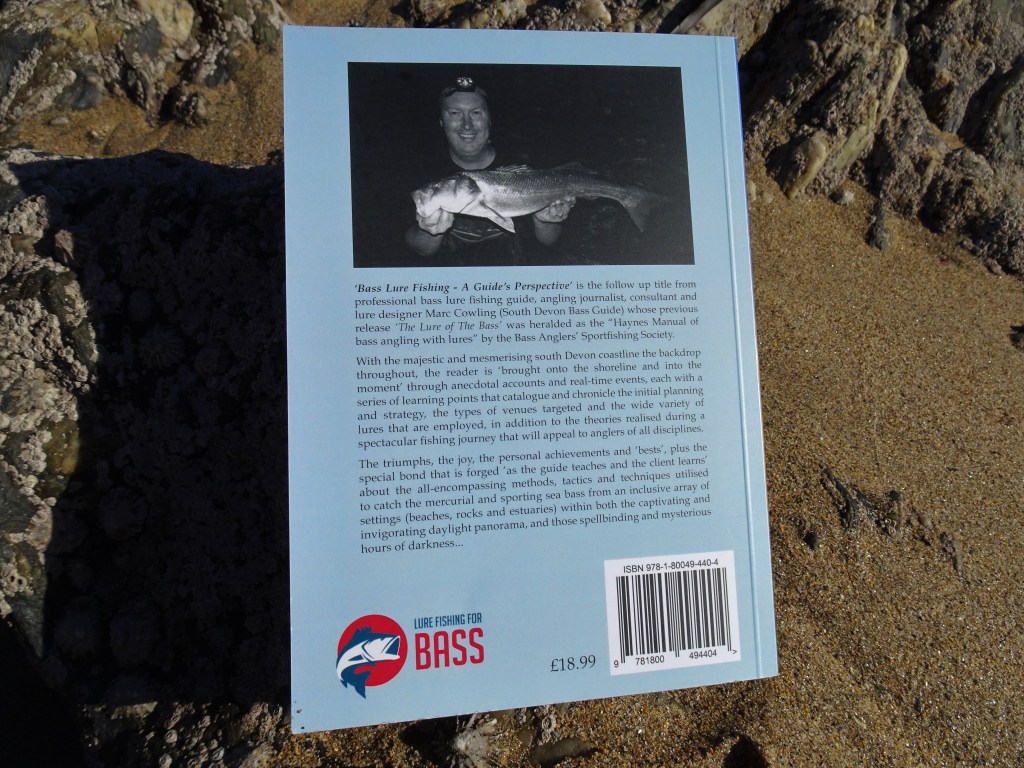

My latest book ‘Bass Lure Fishing – A Guide’s Perspective (Volume 2)’ is IN STOCK and available to purchase. Details of the contents within each respective book in the image above can be found in the blog post that I wrote recently here, in addition to the various PayPal payment options applicable to each book.
Furthermore, my two previous titles: ‘The Lure of The Bass‘ and ‘Bass Lure Fishing – A Guide’s Perspective Volume 1‘ are also BACK IN STOCK and available via the link(s) above. Therefore, if you would like to reserve and pay for a copy of either of these books, or my latest, and you would prefer to pay by Bank Transfer, you can contact me via the Contact Form below or directly at southdevonbassguide@yahoo.com and I will answer as quickly as I possibly can. Thank you.


Thanks for reading.
Marc Cowling

 South Devon Bass Guide Ltd