

Client Catches – Summer Synopsis
(Part 3 of 3)
Finally, some time to catch my breath and write a blog post – although I have to admit it hasn’t all been work, and rather ‘play’ that has primarily kept me away from the keyboard these past few weeks.
My family and I enjoyed an amazing cruise around the Mediterranean at the start of the summer holidays, before I returned (feeling a little more ‘knackered’ than when I left I such was the schedule!) to conduct back-to-back 3 Day Packages. Following this, I had some work to complete on our house, and then we embarked on another short break away. So even my own fishing time has been at a premium (although I did land seven, albeit smallish bass yesterday evening, and followed that up with a memorable session in darkness…
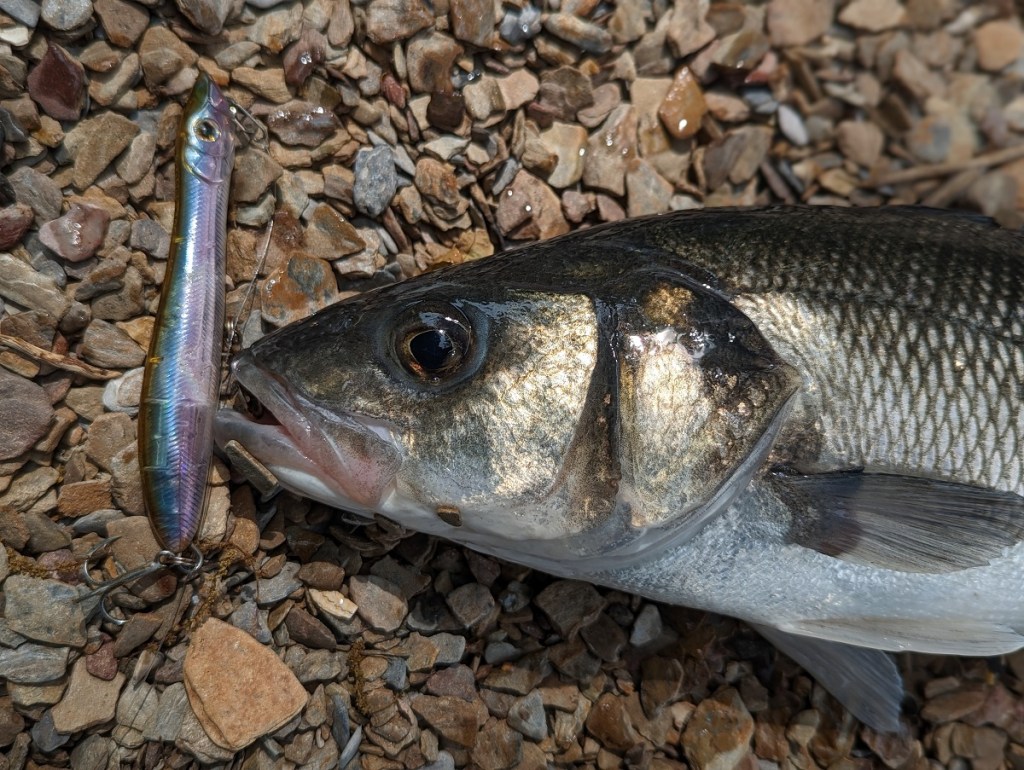
Anyhow, enough of why I’ve been otherwise engaged, and onto the material for this, the final instalment of my ‘Summer Synopsis’ series – one in which I aim to ‘ram home’ the virtues, not to mention the bass attracting capabilities, of the marvellous Xorus Patchinko 125 here, as well as highlighting when they have been at their most effective so far this summer.
Ironic
When I commenced writing this series I am not kidding when I say that, in daylight at least, the Patch 125 was, for a period of 4 weeks, the only thing the bass were interested in hitting! Indeed, as you may have read in Part 2 (where I cover the wonderful variety in the types of marks in which this fantastically designed lure was appealing to the bass), whether my clients were fishing from a beach, the rocks, or within an estuary, if the water was clear enough (which in my experience isn’t anywhere near as clear as the uninitiated may imagine), and not overly rough, then despite other lures (including the smaller 100mm and larger 140mm versions of it here and here) or lure types being utilised alongside it, the 125 model prevailed – and rather impressively so too.
Ironically though, leading up to my 2 week break from my South Devon Bass Guide operation to head off on holiday, there was a definite shift towards the bass being far, far more interested in ‘whacking’ much smaller items that were being retrieved sub-surface – their ‘search image’ very obviously fixed onto the copious numbers of sprat/whitebait that began bouncing up the shoreline during the second and third weeks of July.

Yep, the hard diving minnows made a serious comeback within all manner of situations, conditions and environments in July, the details of which I will be covering in my next post. But back to the hear and now, and I touched on something in the previous paragraph that I think is worth elaborating on: the perceived ‘ideal or optimum’ sea state in which to utilise a surface or top-water lure. Calm and clear I hear you say…? Not necessarily…
Same lure, same place…
The above statement encapsulates the captures that my clients have achieved on the Pachinko 125 this year, as do the images within Part 1 and Part 2 of this series, in addition to them being interspersed between the next few paragraphs. Moreover, they offer an insight and provide a fantastic portrayal of the many memorable events that have been accomplished within a variety of sea/water conditions – which, as stated, aren’t the ‘glassy’ sea conditions that I know from my guiding my clients that a good number of bass lure anglers associate, and almost exclusively so, with their use.
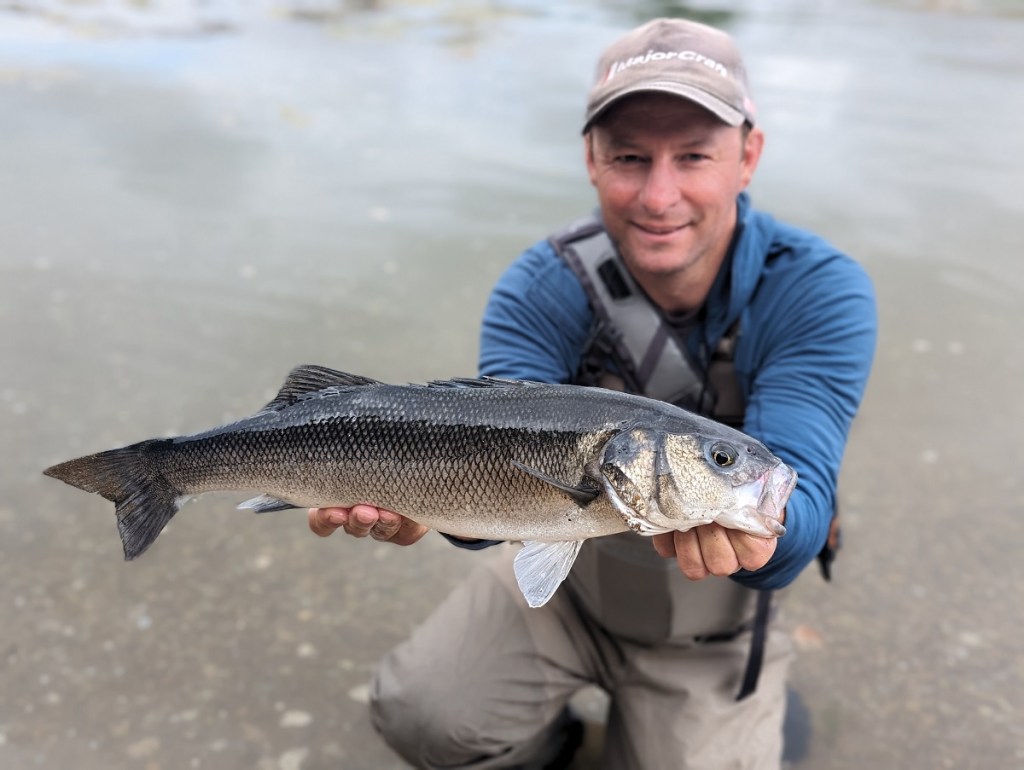
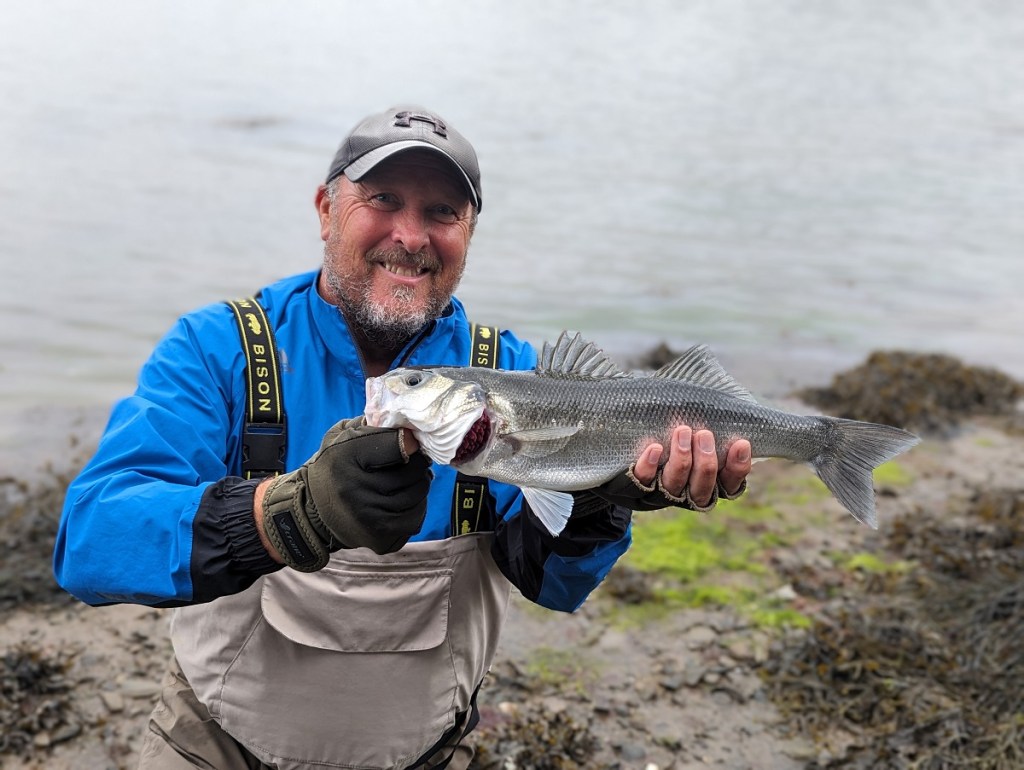
The stunning ‘battleship’ above utterly destroyed the Patchinko 125 that my client (Jud) had attached. And after following my instructions to walk with me 30m or so up the shoreline in order to cast into a very specific zone of water covering a submerged ledge (where a vicious section of current was being deflected around this structure), I knew that if a bass was ‘at home’ (as I suspected) then it would make its presence known. Second cast: BOOOOOOOM! Did it matter that a boat had only just transited through the area – nope, not one jot…

Same mark, and the same lure came up trumps for me again when my forever happy client Richard (above) latched into this dark-backed bass during the first evening session of a 3 Day Package that he’d been eagerly anticipating. “If there’s a bass lying in wait, it’ll nail it” were my words as I manoeuvred him into position so to ensure the surface sliding Patchinko would make use of the current, and travel into the precise position in which Jud had been successful only a few days prior. Oh what a take it was!!!
Versatile Virtues
Taking a quick detour now, and as promised, I would now like to talk about what I believe ‘makes’ the Patchinko 125 in particular such a reliable ‘bass producer’ as it were, and why I would include it within my Top 3 lures of all time – a bold statement I know… Of course, you may already own one or two, or a dozen! But as I always aim to write these posts with the less experienced bass lure anglers out there in mind, here goes.
First of all, they cast ‘better’ than pretty much all of the surface lures of a similar size and design out there – that I am aware of anyhow. Next. yes, they will cast a hell of a lot further with a tailwind, but even if the breeze is in your face, or whipping across you, then they will ‘arrow out’ exceptionally well.
In a nutshell, and I cover this/these scenarios in my first book ‘The Lure of The Bass‘ if I am utilising the Patchinko 100, then I will generally retrieve it almost continuously to mimic small bait fish scattering, whereas if I am using the big brother of the bunch, the 140 (there is a 165 ‘Daddy’ of the all, but I haven’t used one as yet to be honest) then I will recover it in a slower, more thrashing yet still zigzagging motion, interspersed with pauses, both short and long to imitate a prey item in trouble, and therefore in a vulnerable state.
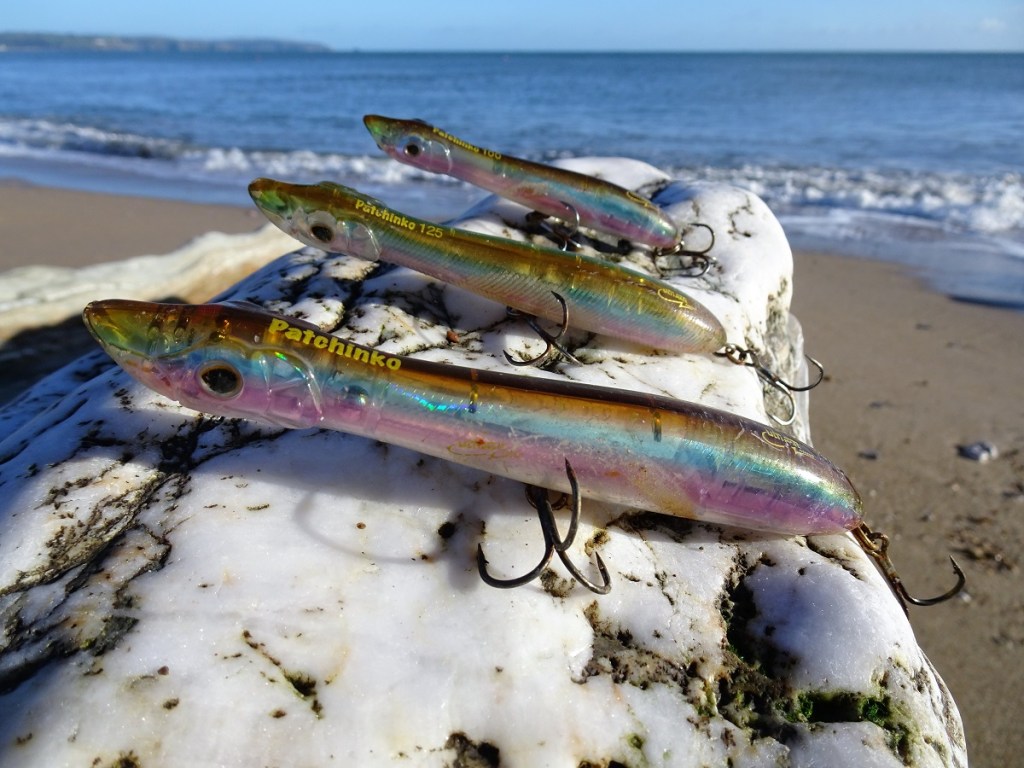
So if you’re thinking well, shouldn’t the 125 version be capable of both of the instances above, then you’d be right on the money. Yep, not only can you effectively ‘tip-toe’ the 125 across the surface layers in a more subtle style in say calm, shallow water, within creeks and quiet bays, but you can also make it crash around with a more vigorous application should the situation demand it – in rougher or choppy conditions, or when fishing in deep water off of a headland for example.
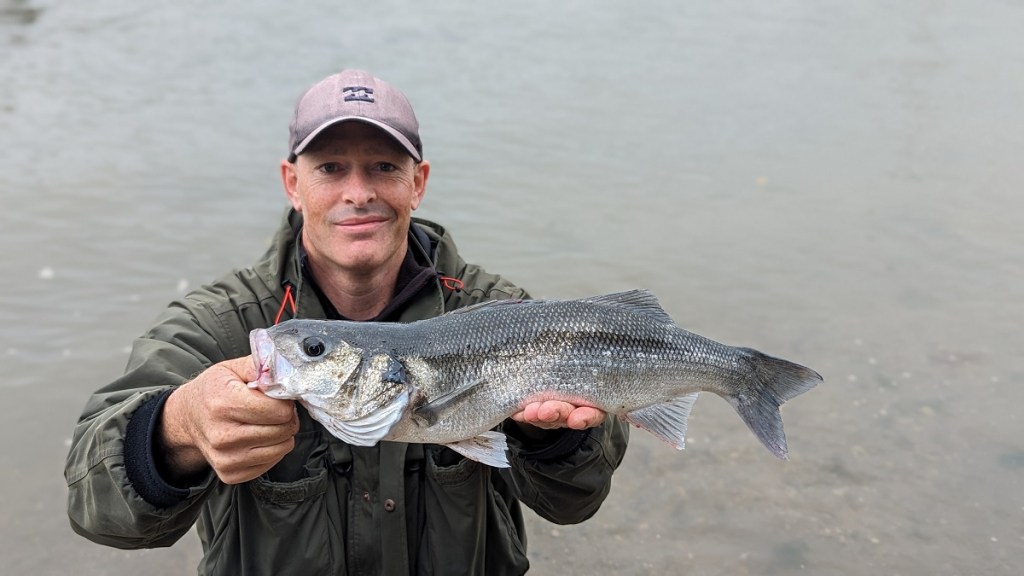
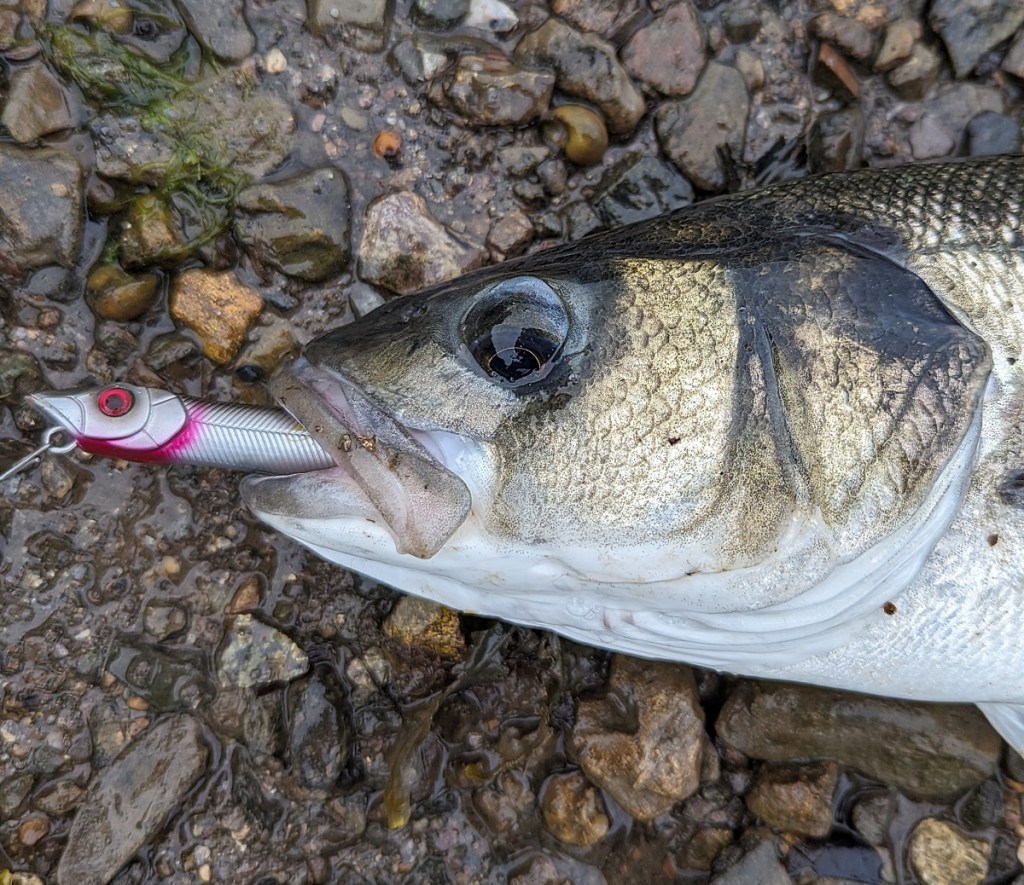
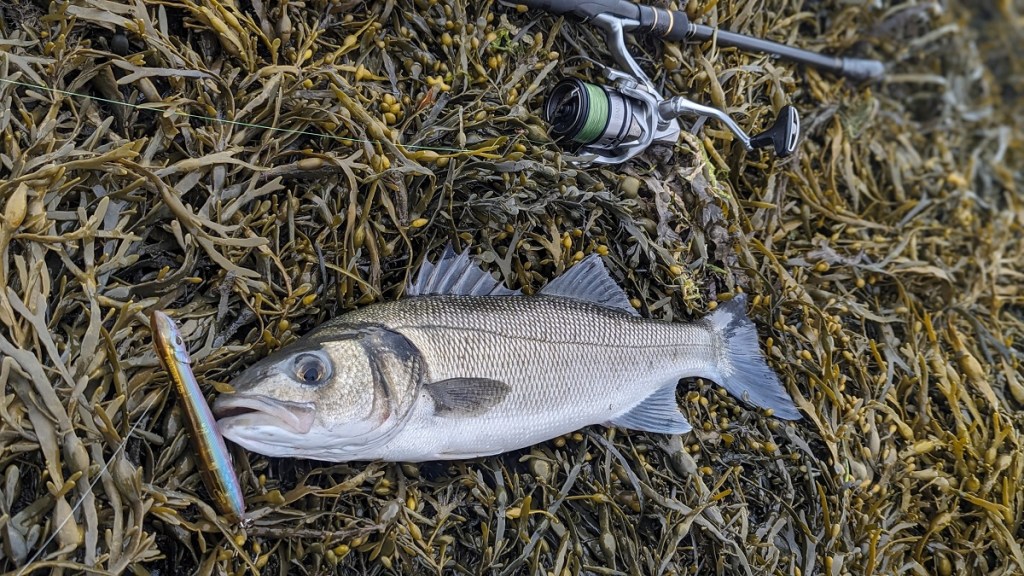
And this leads me onto what I believe is the Patchinko 125’s greatest attribute – not only its stability in flight that I’ve covered, but also its exceptional ‘presence’ on the water. Indeed, the bass above and below this paragraph were landed when the wind was blowing against/opposite the strong current to cause some seriously ‘choppy’ conditions.

Light levels
Something you may of noticed about the photographs of the many happy clients holding Patchinko-caught bass in this post (including the three below) is that they were all achieved either in dull, cloudy conditions, or indeed towards dusk… Expanding on this, when it comes to writing my end of year review, a very prominent aspect to the majority of the surface-lure-caught bass so far this season is that they have been accomplished when the light levels were on the low side.
Is there something in this, in addition to their reticence and reluctance to hit a lure splashing above their heads in brighter conditions? It wouldn’t ordinarily be an issue depending on the overall environment we were fishing within, but yes, I believe there is, and it all links in to that fabled ‘search image’ that I regularly write and talk about – including earlier in this post in regard to the sprat and whitebait being present and the sea being clear the majority of the time.


But one, and use it!
I do realise that a high percentage of people reading this will: a) already own a Patchinko 125, or b) will be fully aware of its meritoriousness. However, if you don’t or aren’t, then I would highly recommend purchasing one of the pattens that incorporate an internal flash plate or mirror, as believe me when I say that I have witnessed, first-hand, and multiple times too when guiding two or more clients on the same venue at the same time, just how much of an ‘edge’ this will provide.
Flash! Ah-ah!
Note that from time to time, I have come across some of the colours listed below without the flash plate… Whether this is because they are ‘fakes’ or because Xorus/Ultimate Fishing like to change things up a bit I am not sure. An example is that the 100mm and 140mm Lieu/500g versions used to encompass the flash plate (I know this because I have old lures here at home) yet for some reason they no longer do… The patterns/versions that incorporate this vital attribute are
- Ghost Lancon
- Lieu or 500g
- Ghost Iwashi
- Holo Bait
- UL Ayu
- Ghost Green
- Cabot
- Ghost White Iwashi
My Books
(Including my latest release ‘Bass Lure Fishing – A Guide’s Perspective Volume 2’)


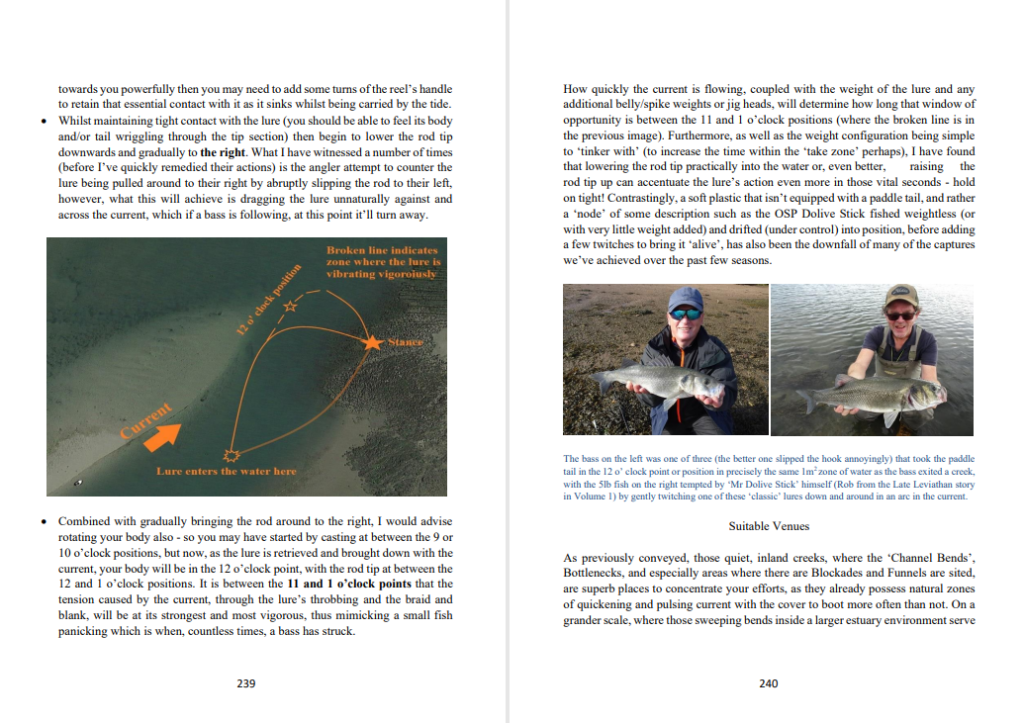

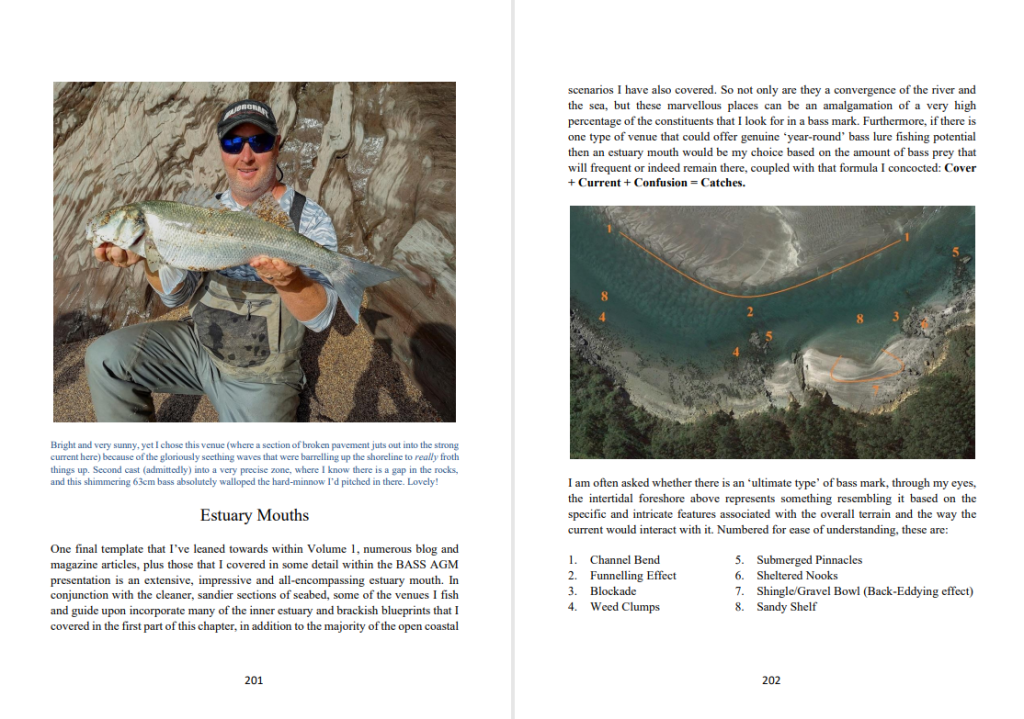

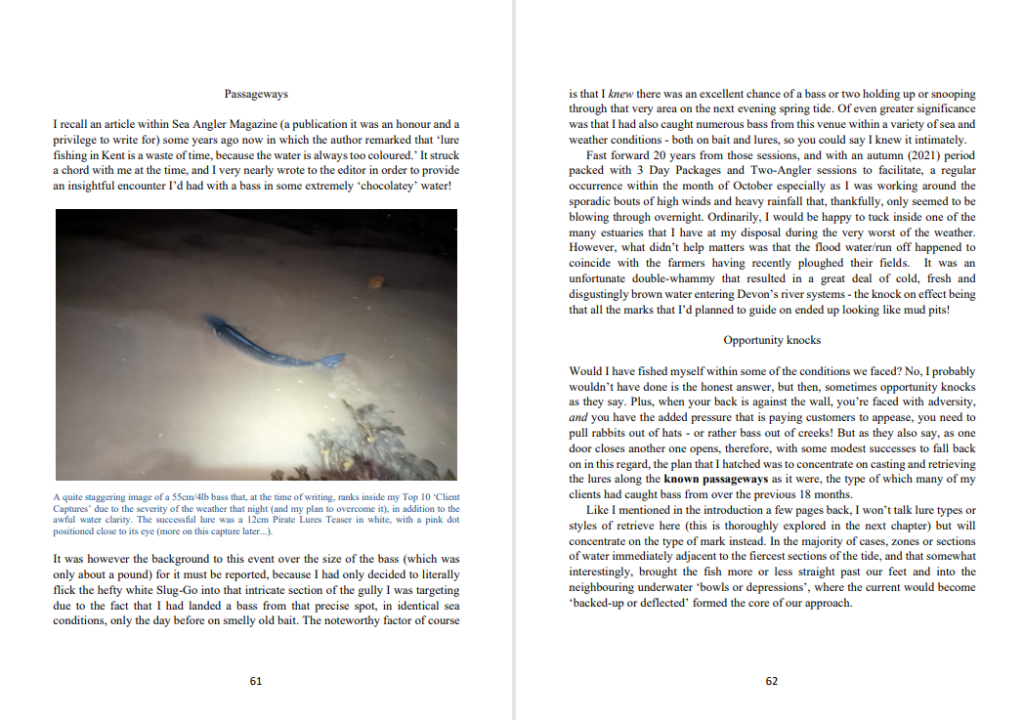

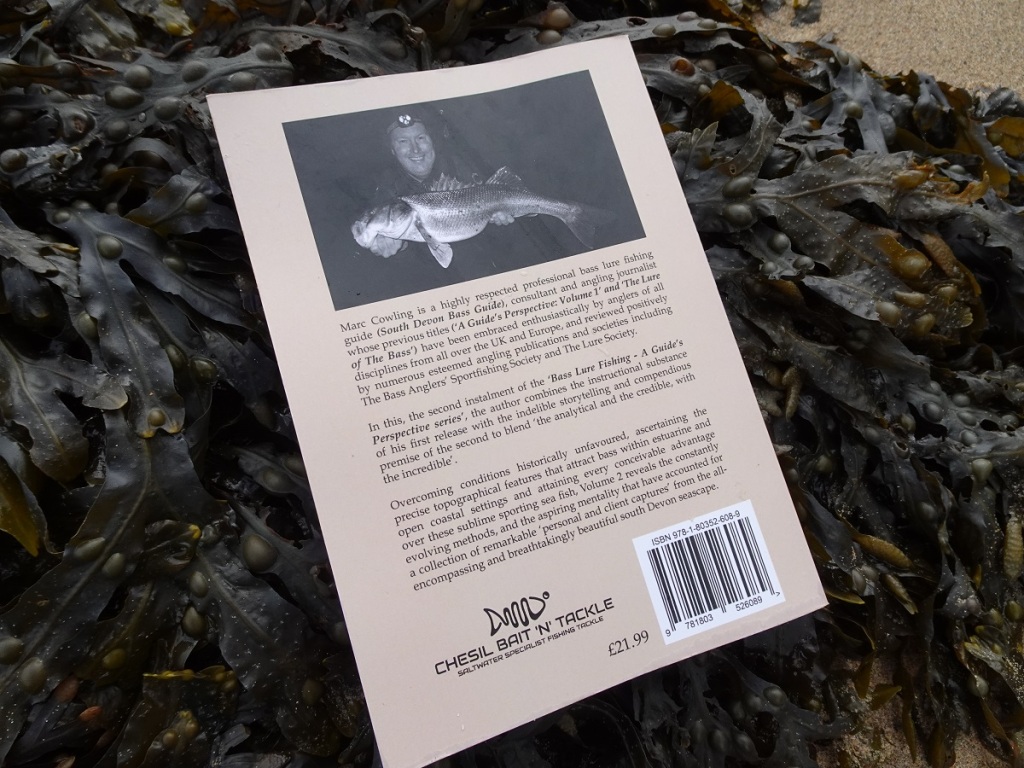

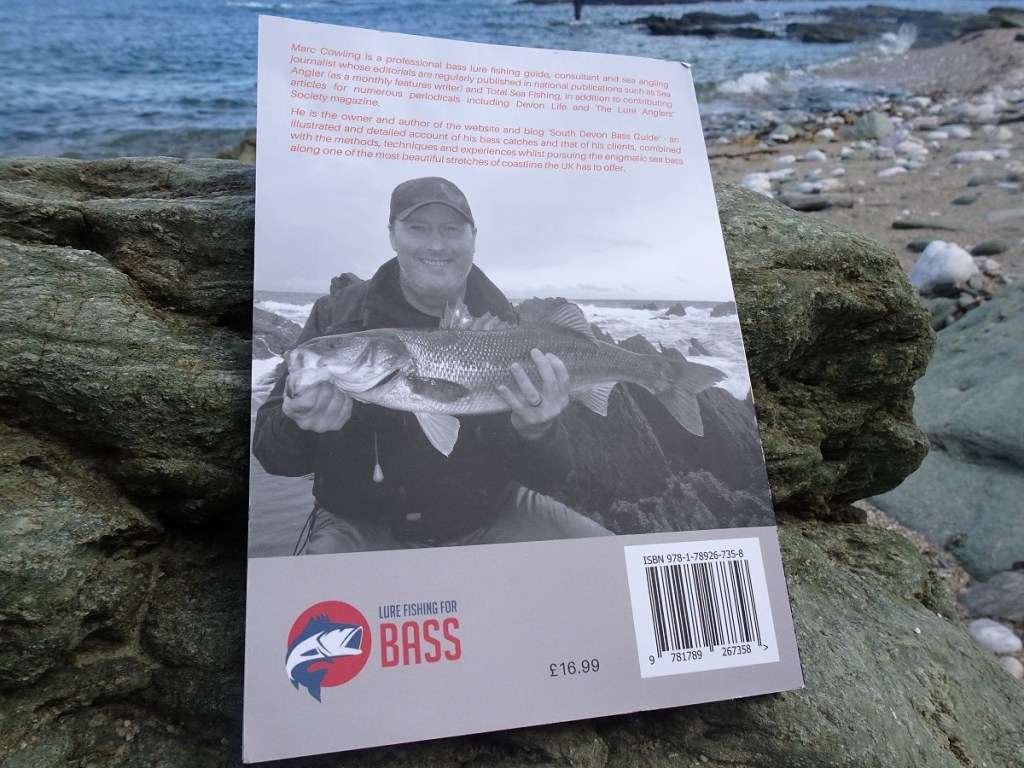


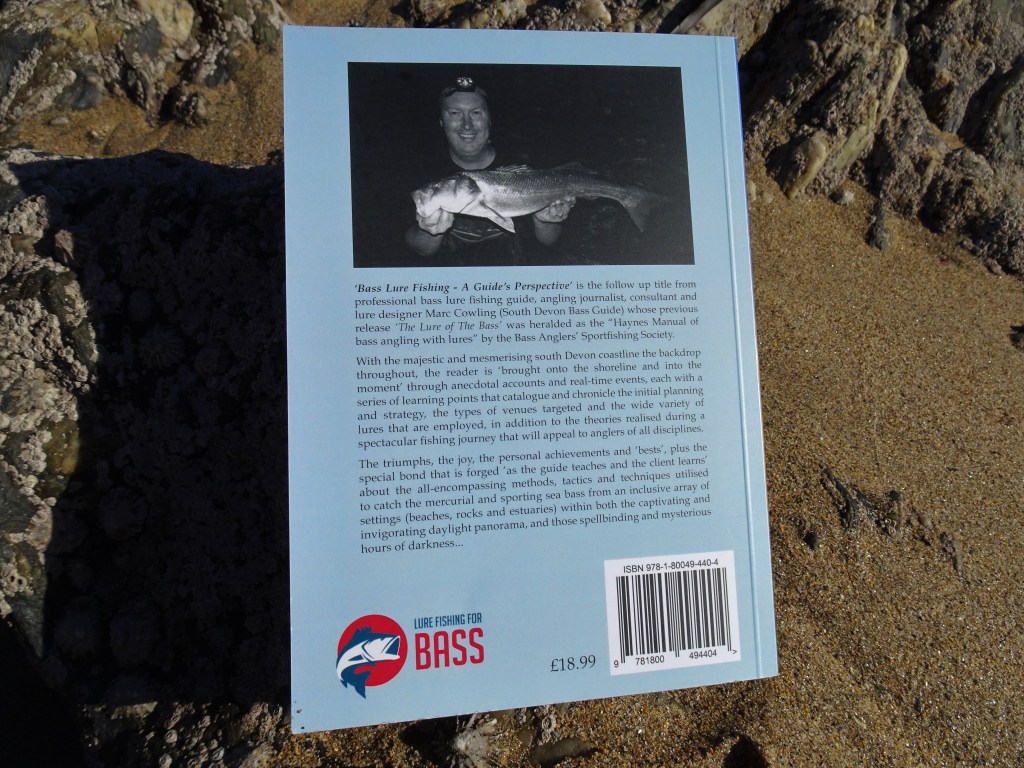
My latest book ‘Bass Lure Fishing – A Guide’s Perspective (Volume 2)’ is IN STOCK and available to purchase. Details of the contents within each respective book in the image above can be found in the blog post that I wrote recently here, in addition to the various PayPal payment options applicable to each book.
Furthermore, my two previous titles: ‘The Lure of The Bass‘ and ‘Bass Lure Fishing – A Guide’s Perspective Volume 1‘ are also BACK IN STOCK and available via the link(s) above. Therefore, if you would like to reserve and pay for a copy of either of these books, or my latest, and you would prefer to pay by Bank Transfer, you can contact me via the Contact Form below or directly at southdevonbassguide@yahoo.com and I will answer as quickly as I possibly can. Thank you.


Thank you for reading.
Marc Cowling

 South Devon Bass Guide Ltd